
Hawker's Cottage
Coombe, Morwenstow

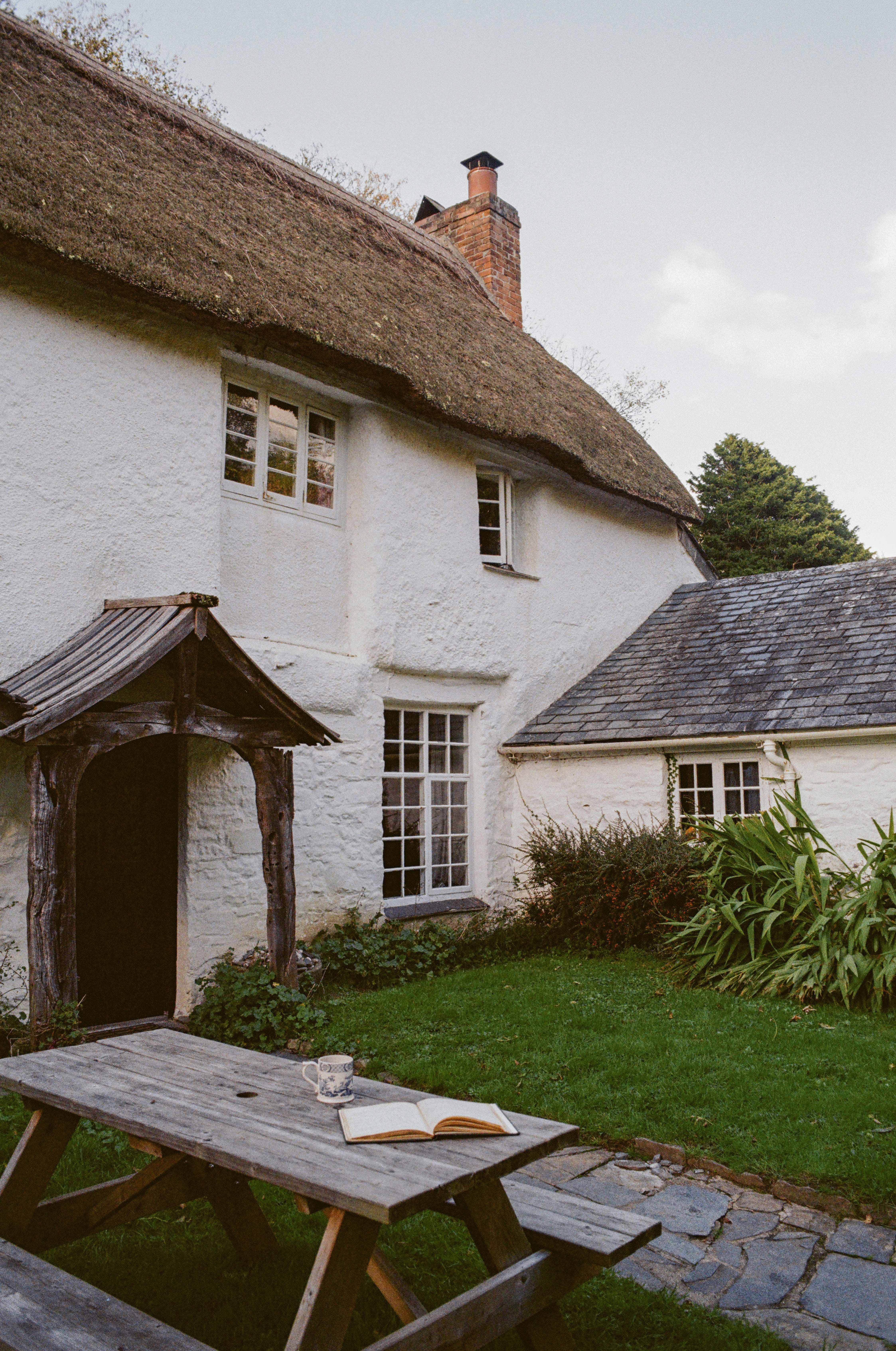
A long weekend at the beginning of autumn was spent in the Cornish hamlet of Coombe. We had booked a Landmark Trust stay to celebrate my Dad’s 70th birthday.
The snaking road descends swiftly through the shade of spreading oaks into the secluded hollow of Coombe. A lively brook winds through the dell, crossed by a ford and a rustic wooden footbridge. Clustered around it, amid old orchards, stand a weathered watermill, its mill house and a handful of quaint cottages.


The first recorded mention of Coombe dates back to 1520, but this remote valley stretching inland from Duckpool has been inhabited since ancient times. At the valley’s head, traces of a decayed earthwork in Stowe Woods marks the site of an Iron Age fort. While the oldest existing houses in Coombe are from the 17th century, they likely sit atop much older foundations. In the 1960s, the Landmark Trust purchased the hamlet as part of a collaborative effort with the National Trust to preserve the humble character of the buildings and their surroundings.
Just before the ford crossing, we caught sight of our thatched home for the next few days. Hawker’s Cottages have served as a single dwelling for most of their history, though the two ends were built at different times. No. 2 forms the older half, with two-foot-thick walls, a pegged collar-rafter roof, and a cloam bread oven (made with local clay), suggesting a date in the mid-17th century. The adjoining cottage No. 1 was likely added in the mid- to late-18th century.
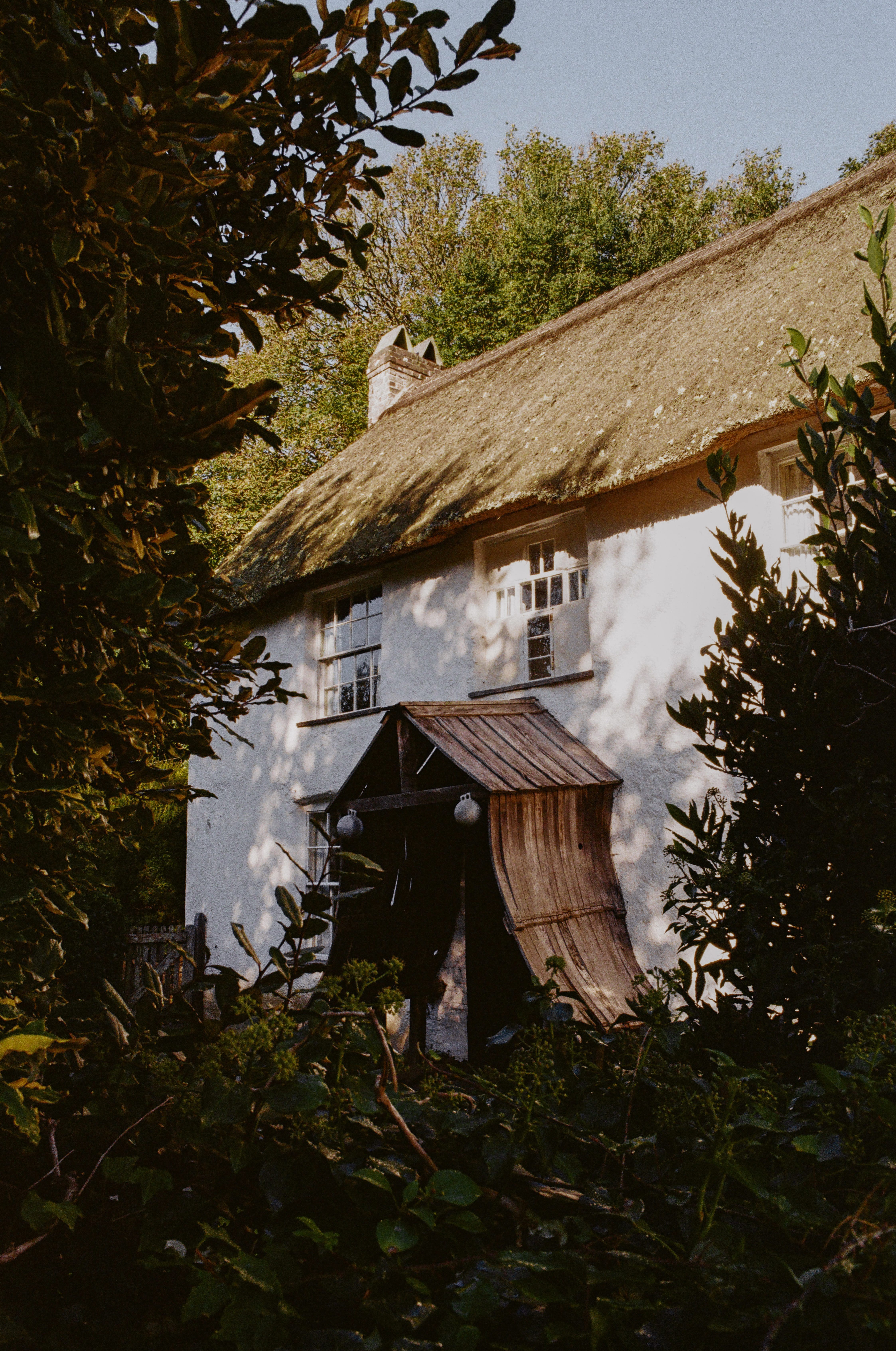
We waited for my parents to arrive before stepping inside No. 2, excited to share a Landmark welcome with them. I opened the lychgate and we marked time in the sheltered walled garden. The evening was bathed in watery autumn light and babbling murmurs of the stream. I peered over the ivy-clad wall into the garden of No. 1, admiring its gabled timber porch splaying out like a pair of open arms, fashioned from battened boards that bore the marks of earlier lives. Above the porch a cross-shaped window glimmered.


By the 1820s, this modest farmhouse took on a gentler grandeur as a gentleman’s residence. It became home to Robert Stephen Hawker, writer, and celebrated Vicar of Morwenstow, who spent his early married life within the cottages’ sloping walls. The cross of light from the window remains his signature upon the house: a whimsy wrought in wood and glass, much like the curious chimneys he later raised just down the coast at Morwenstow Vicarage, each modelled on the towers of Cornish churches.
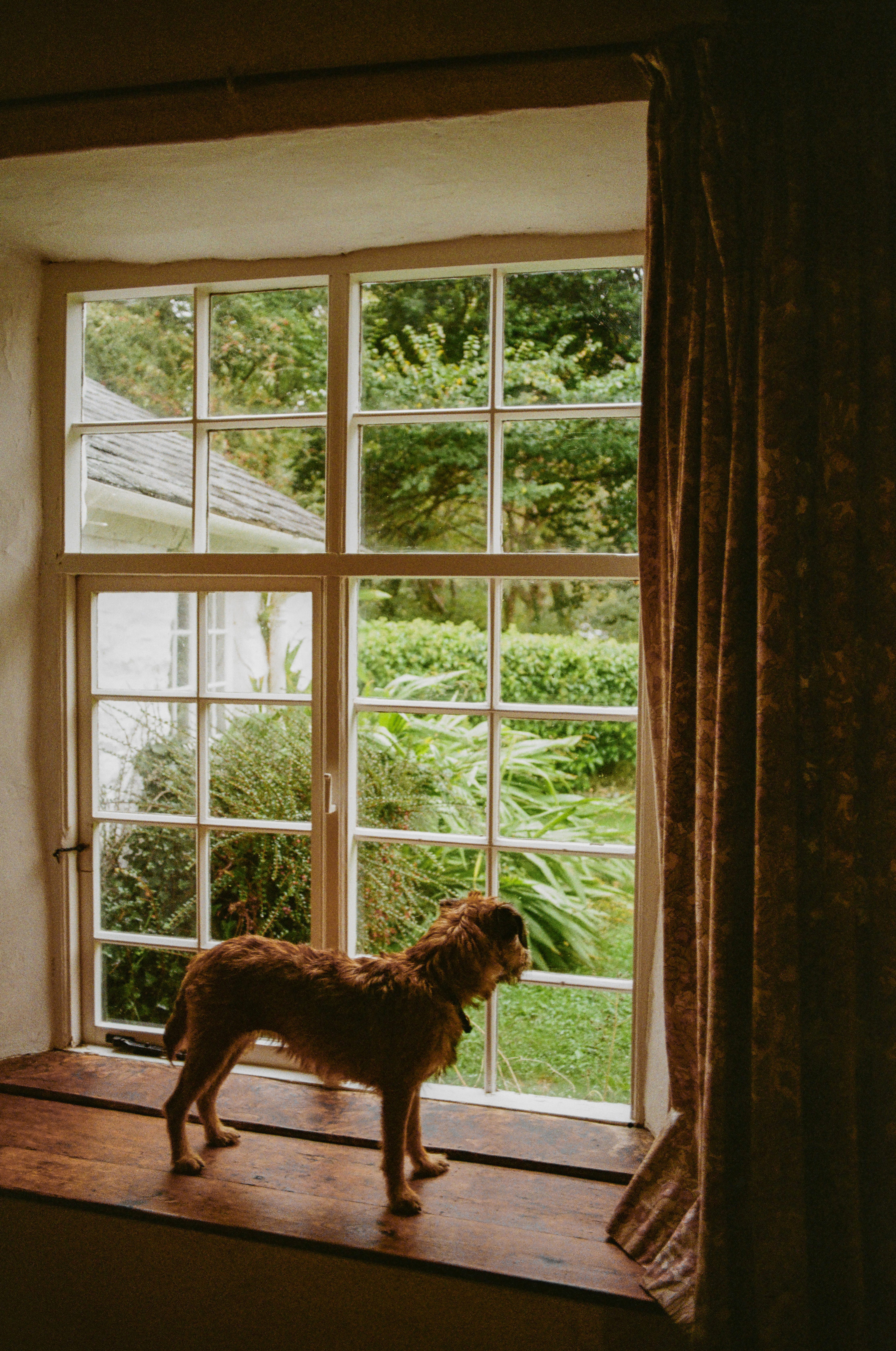
My parents’ car pulled up on the drive. Bessie, our family dog, bounded across to greet us. She was the first to pad over the cottage’s giant Cornish slate flagstones into the living room, and headed straight to sniff at a grand dark-pine press cupboard. Crafted many generations ago by the carpenter at Coombe, it has stood in the cottage for as long as anyone can remember.


The log burner was soon blazing and our belongings were tucked away into the homey bedrooms. After supper, we sat around the fire playing cards and flicking through the Landmark Trust Logbooks and History Album, swotting up on the building’s past. It was decided that we would follow in Hawker’s footsteps and venture to Morwenstow the following day.
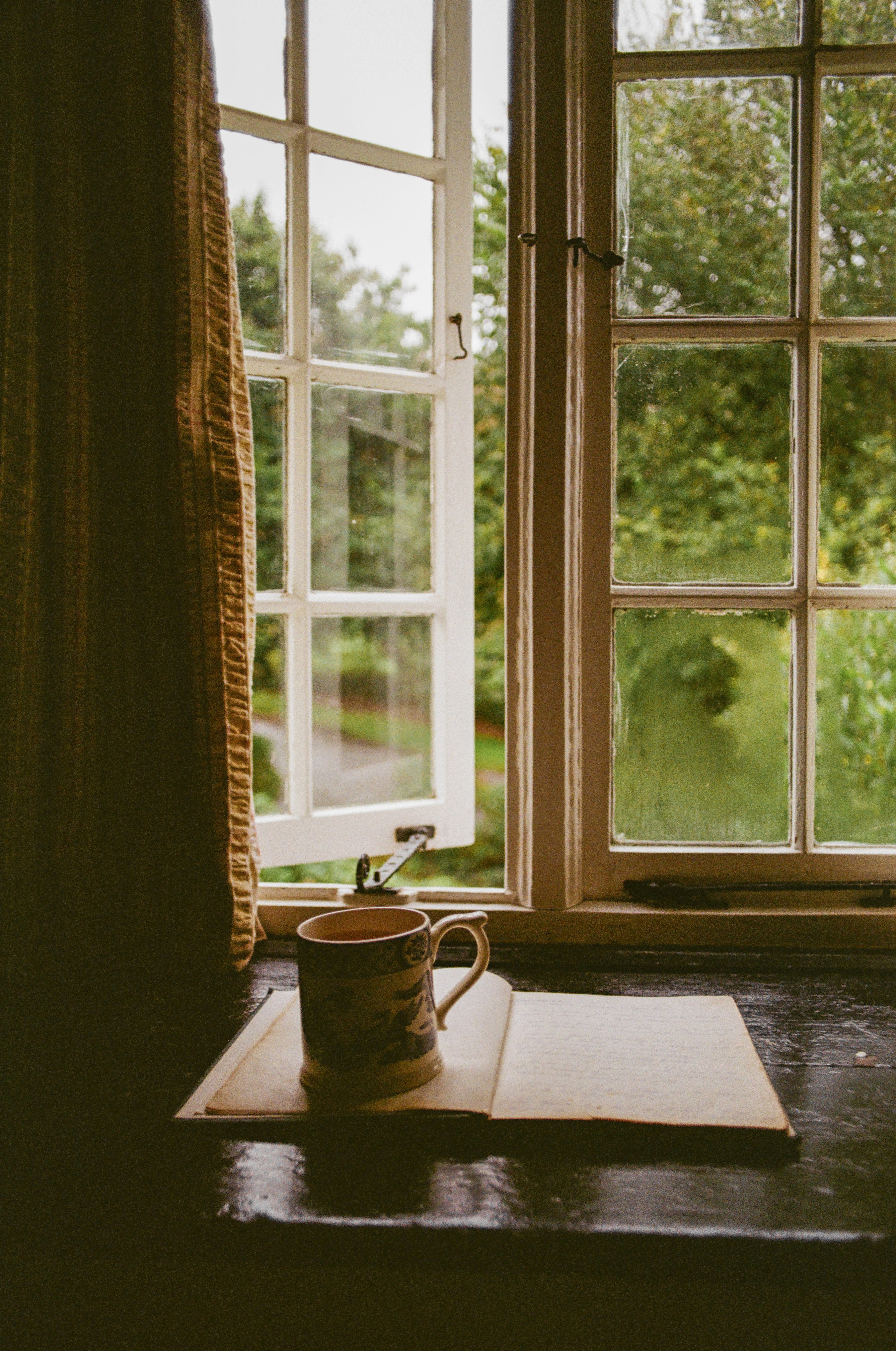
We woke to dribbles of condensation on the window panes and a lashing downpour that had painted the valley a deeper shade of green. The morning lingered lazily, scented with grilled bacon and coffee. When the showers eased, Dad and I took the chance to venture out. We crossed the swollen stream and walked Bessie through the sagging orchards, where apples hung heavy and fell with soft, satisfying thuds. By the rusted orange wheel of the old watermill, I remembered its mention in Charles Kingsley’s Westward Ho!. The heroine, Rose of Torridge, was sent to stay with her uncle, the miller here, as Kingsley wrote ‘sitting in the little farmhouse beside the mill, buried in the green depths of the valley of Coombe.’


The rain held off, and the others joined us for an amble down to Duckpool, where the stream spilled into the sea and a sweep of sand emerged with the falling tide. We slurped steaming hot chocolate from a little kiosk by the car park, collected driftwood and clambered over jagged rocks archived with layers of sediment. Bessie chased her ball through the shallow pools. Then back to the cottage, and thick slices of Mum’s lemon drizzle cake, washed down with tea served in the Landmark Trust’s Old Chelsea Blue china.
Our plan to trek the coastal path to Morwenstow that afternoon was scuppered by the weather. We opted to drive over instead and walk the loop from the pub. F and I had visited before and were eager to introduce the family to more of Hawker’s old haunts.


Hawker had appointed himself guardian of those drowned along this treacherous coast, a shoreline where shipwrecks were once so common that the majority of local homes incorporated their timbers. When Hawker arrived in Morwenstow, he found a decaying church in a community where smuggling passed for a trade and wrecking was regarded as a right. Determined to change their ways, he urged his parishioners to guide ships to safety rather than lure them onto the rocks for plunder. Hawker took it upon himself to build a small lookout on the clifftop, constructed with salvaged wood from the coves below. Here he would sit during storms, scanning the grey waters for ships in distress. In 1842, the Caledonia wrecked off Sharpnose Point near Morwenstow. Hawker personally buried the bodies of the dead and tended to a lone survivor. From the wreck, he recovered the ship’s figurehead and placed it in the churchyard to mark the graves of the captain and crew.
It felt fitting that a gale picked up as we passed through the churchyard. Branches overhead were blasted into obscure shapes by wind that whipped our raincoats and tugged at our hair. We stopped at a replica of the figurehead, a Scottish maiden armed with a cutlass, watching over the sailors’ resting place. Inside the Norman church, we found the original figurehead preserved as part of a memorial. For 162 years she stood steadfast in the churchyard, weathering Atlantic storms until finally succumbing to decay. Now restored and returned to the church, she endures as a quiet, land-bound echo of the fate of the Caledonia.


We fought against the wind across seaward fields, peering down at the white-topped waves kicking up against the cliffs. Turning off the coastal path, a short flight of steps cuts into the rock, leading to a narrow ledge where Hawker’s lookout clings (now the smallest property owned by the National Trust). Built partly into the earth, the hut is a rough, bunker-like structure with slate floors, simple timber seating and vast views. It doesn’t so much look out to sea as the sea looks into it. Though it has been repaired many times, the thought that parts of this ramshackle dwelling were once wreckage, hauled up the cliffs and nailed together by Hawker, makes it an extraordinary place to hide away.
For years, Hawker watched the Cornish coast from his hut, aiding ships and finding solace in solitude. It was his refuge and muse, a place where he wrote poetry, including ‘The Song of the Western Men’ (now the Cornish national anthem). Friends like Alfred Tennyson and Charles Kingsley visited him here, drawn by both the rugged scenery and Hawker’s outlandish charm. Known for his quirks, Hawker reputedly spoke to birds, kept a pig and a stag as pets, let animals join his congregation, wore vivid, unconventional clothing and even dressed as a mermaid on occasion, complete with a wig of seaweed. Initials of passing walkers carved into the walls of the hut stand as rough-hewn tributes to a heroic eccentric, hermit, poet and social reformer, happily adrift from the world, like a ship in a bottle.
After our blustery walk, we sought refuge in the village pub, The Bush Inn. Said to date from around 950 AD, it began as a monk’s rest house for weary pilgrims. Clues to its origins still remain in the main bar, where there is a Celtic piscina cut from stone and a monastic cross carved into the flagstone floor. In the middle bar, a ‘leper’s squint’ can be found, once used to pass food to the afflicted, later serving as a smuggler’s lookout. Licensed since the 13th century, the inn became a haven for wreckers and rogues, its dark tales are said to have inspired Daphne du Maurier’s Jamaica Inn. We shared cheesy chips and Cornish cider from a pew beside the glowing hearth, marveling at how little has changed at Morwenstow, save the farmers who gather where the wreckers once plotted.


The rain-swept, wind-swept day invited an evening of feasting and idling by the fire with a whisky nightcap. But the following morning dawned clear and dry, so after a breakfast of pancakes, we pulled on our boots and set out. Our circular route led toward Sandymouth, passing through the centuries-old Stowe Wood. The path wound over deeply anchored roots spreading out like claws beneath a gnarled oak canopy beginning to brown with autumn colour. We skirted the Iron Age Cornish Round, now a mossy, fern-topped mound encircled by tall pine spears. Emerging from the woodland, we followed a tree-lined avenue once leading to Stowe House. Built by the Grenville family in 1679 and demolished just 60 years later, the great house survives only in traces with the farmhouse that replaced it later that century, the family crest above its pillared porch, and a long brick wall that still borders the path. We picked up a bag of fresh mushrooms from an honesty box stand near the farm, before joining a bridleway to sheep-spotted fields running up and down the clifftops; the rocky coast laid out before us.
F and I braved a swim with the choppy tide at Sandymouth. We bobbed up and down with our backs to the spray, staring up at the wave-cut shapes of the twisted cliff face made up of rocks formed 300 million years ago. A quick warm up at the cafe above the beach, then it was back to Duckpool along this dramatic stretch of coastal path.


Returning to the cottage, we snacked on fish-finger sandwiches then picked rosy red apples from the orchard to have with cheese that evening. It was a night of candlelight, books and toasts to Hawker. I took Bessie for a wander before bed when a waxing crescent moon shone high above the dark valley. Bats fluttered round the mill, thin streams of smoke rose from the chimneys and chinks of warm light fell from the windows of our neighbouring lodgings; signs of others revelling cosily in the old magic that lingers at Coombe.


Before surrendering to the drive home, we spent our final morning just beyond the North Devon border, sauntering around Clovelly. This famously romantic village is a tumble of whitewashed 14th-century fishermen’s cottages and meandering passageways clinging to the cliffs and cobblestones. It was a perfect day to visit, out of season and below a sky of flawless blue. After a final drink on the quayside, we made tracks, reluctant yet restored from a weekend at Coombe, fully nourished with a deep contentment.
Absolutely gorgeous, sounds like my idea of heaven!!