
Luttrell’s Tower
The Shores of the Solent

A tunnel lies beneath the tower. An unassuming door from the cellar leads to a long, arched passageway beyond an iron gate. We fumble for the key and follow in the footsteps of lamplit shadows. The imagined tang of tobacco lingers in the stale air, exhaled by the encasing stone. The tunnel ends at a heavy wooden door. The bolt is drawn back, flooding the passage with moonlight and the sound of the waves lapping against the steps beneath us. Whispers hurrying ashore from a phantom ship, arms laden, bottles clinking. A signal code winking from atop the tower.
How easy it is to dream it all up here. How the stories swirl, spiralling up and down the cold stone stairs.


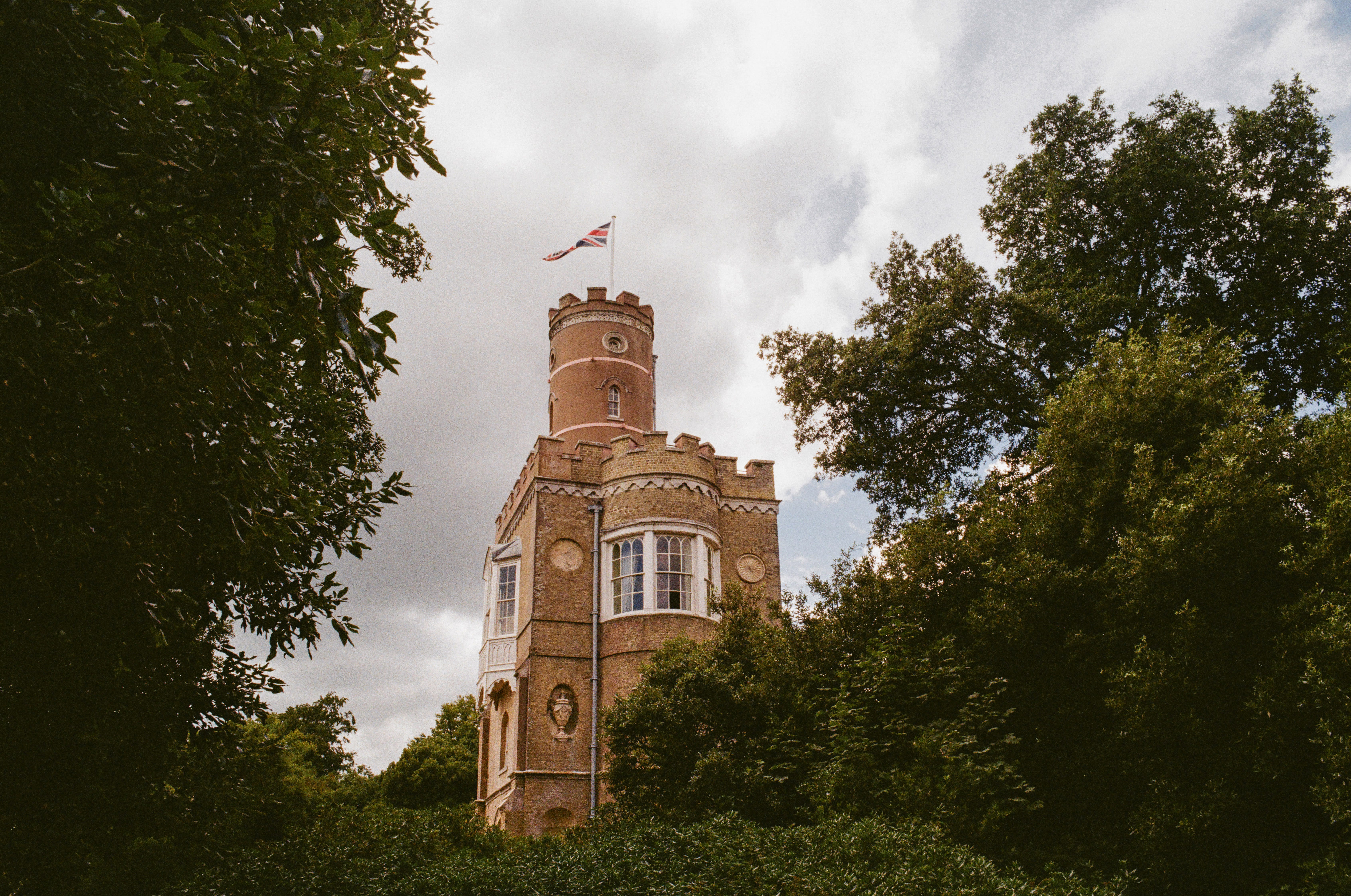
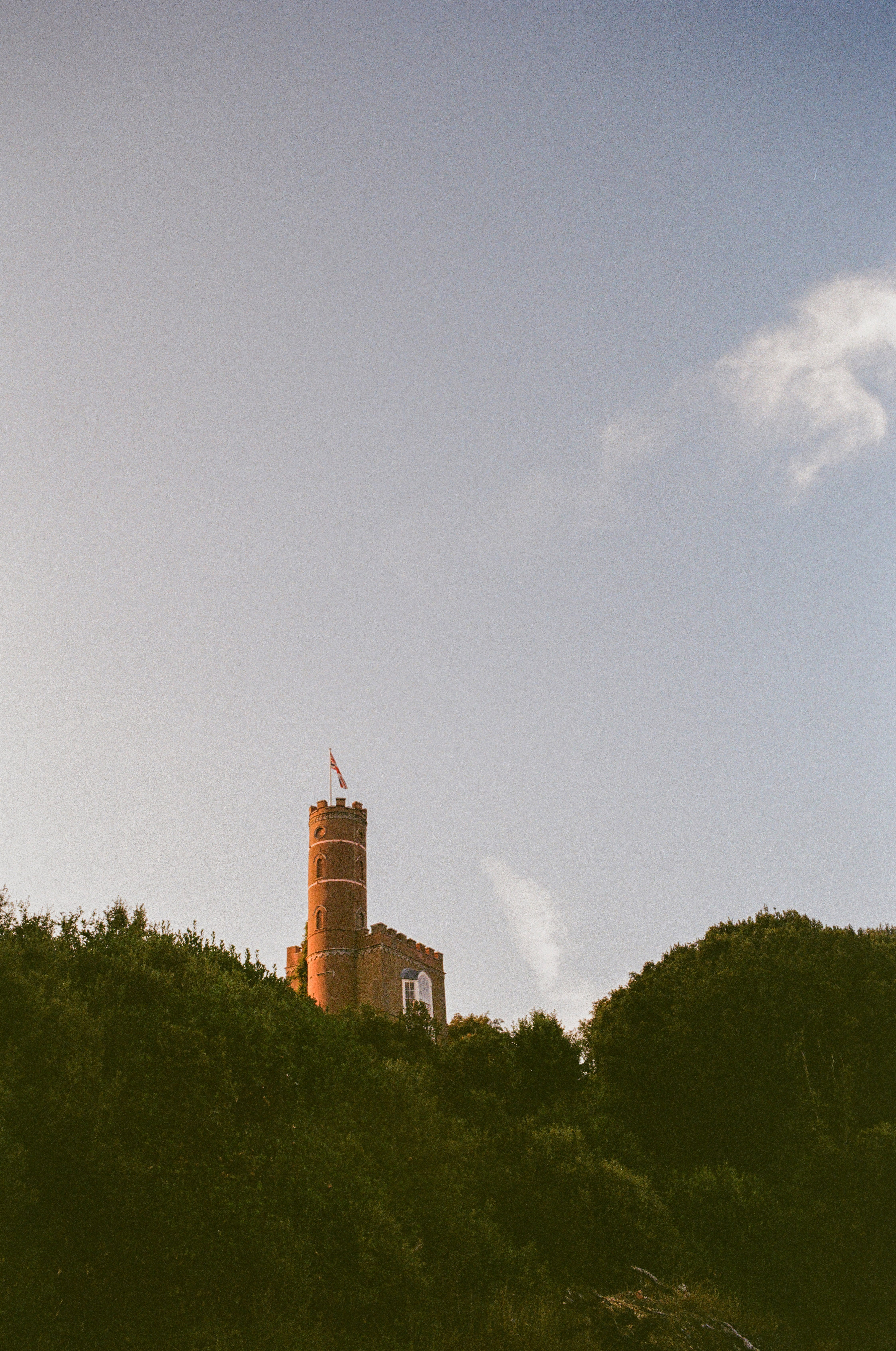
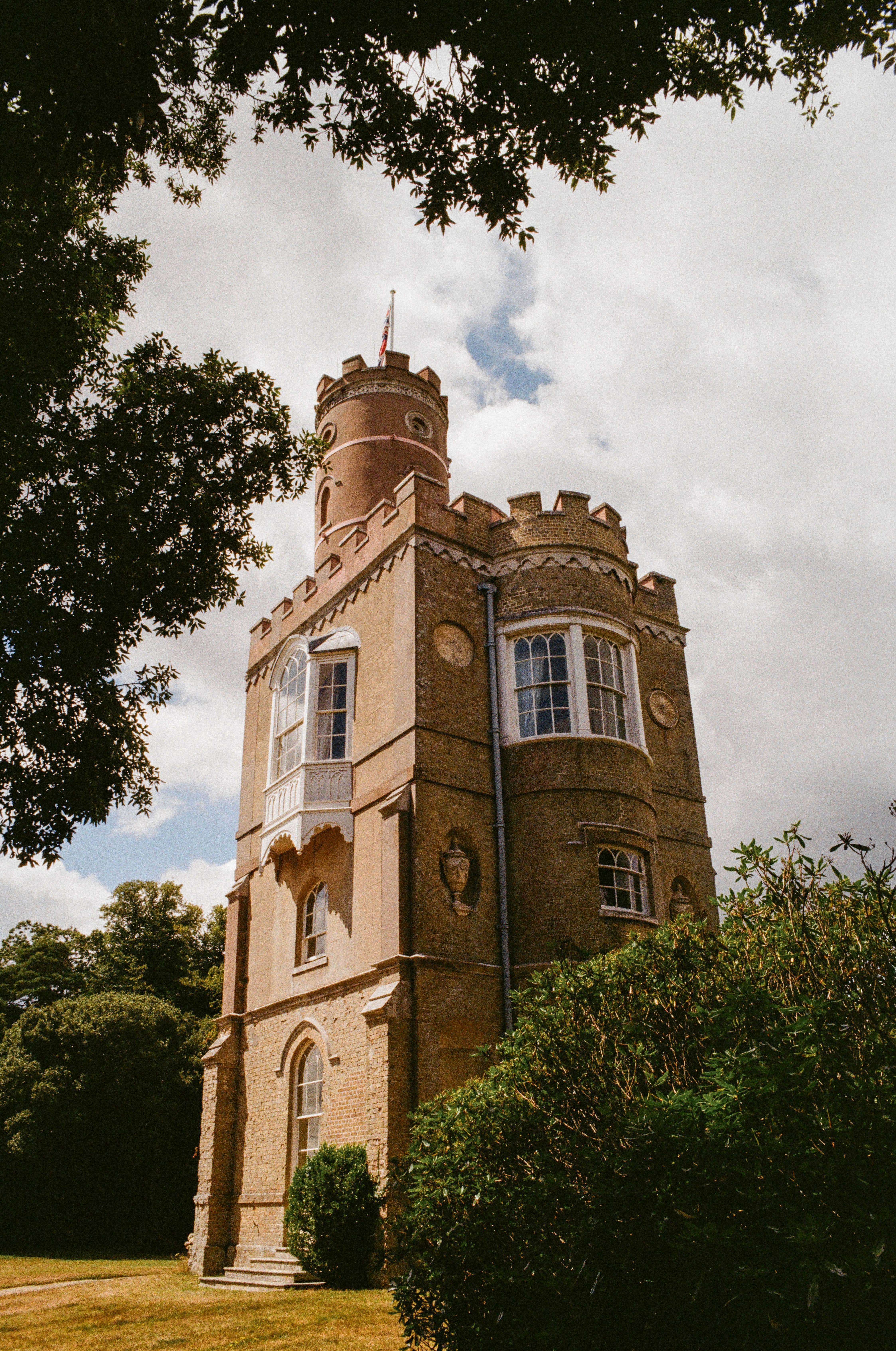
Luttrell’s Tower is a striking fixture of the Hampshire landscape, looming over the shores of the Solent. It was built around 1780 for Temple Simon Luttrell in the grounds of his Eaglehurst Estate. Luttrell was a Member of Parliament, known for his controversial movements in fashionable and often risqué circles. Local legend claims that the tower and its underground burrow were constructed to aid his reputed smuggling activity. A date of 1731 scratched inside the tunnel suggests that it may predate the tower, so perhaps earlier illicit trade took place. Certainly, smuggling was widespread along this part of the coast in the 18th century. The ever-restless Solent strait separates the Isle of Wight from mainland England; a historical maritime route that was once a smuggler’s playground. Luttrell may have been an enterprising partaker, his tower perfectly equipped for the discreet landing and storing of contraband.
Luttrell had his tower designed in the Gothic Revival style, a whimsical harking back to forms of the Middle Ages. It was first tentatively attributed to architect James Wyatt but later proven to be the only known surviving building of architect Thomas Sandby, the first Professor of Architecture at the Royal Academy.
Our car crunched along a gravel drive, past a white-painted lodge and through a thick spread of mature trees. We emerged to a postcard perspective of the edifice, rising above a sparkling band of sea. I sprang from the car, circled the tower’s footprint and giddily admired its affections: the weathered stone, crenellated battlements, pointed arches, oriole windows, classical urn relief and other theatrical flourishes. In the light of that late summer evening, Luttrell’s folly glowed with gothic glory.


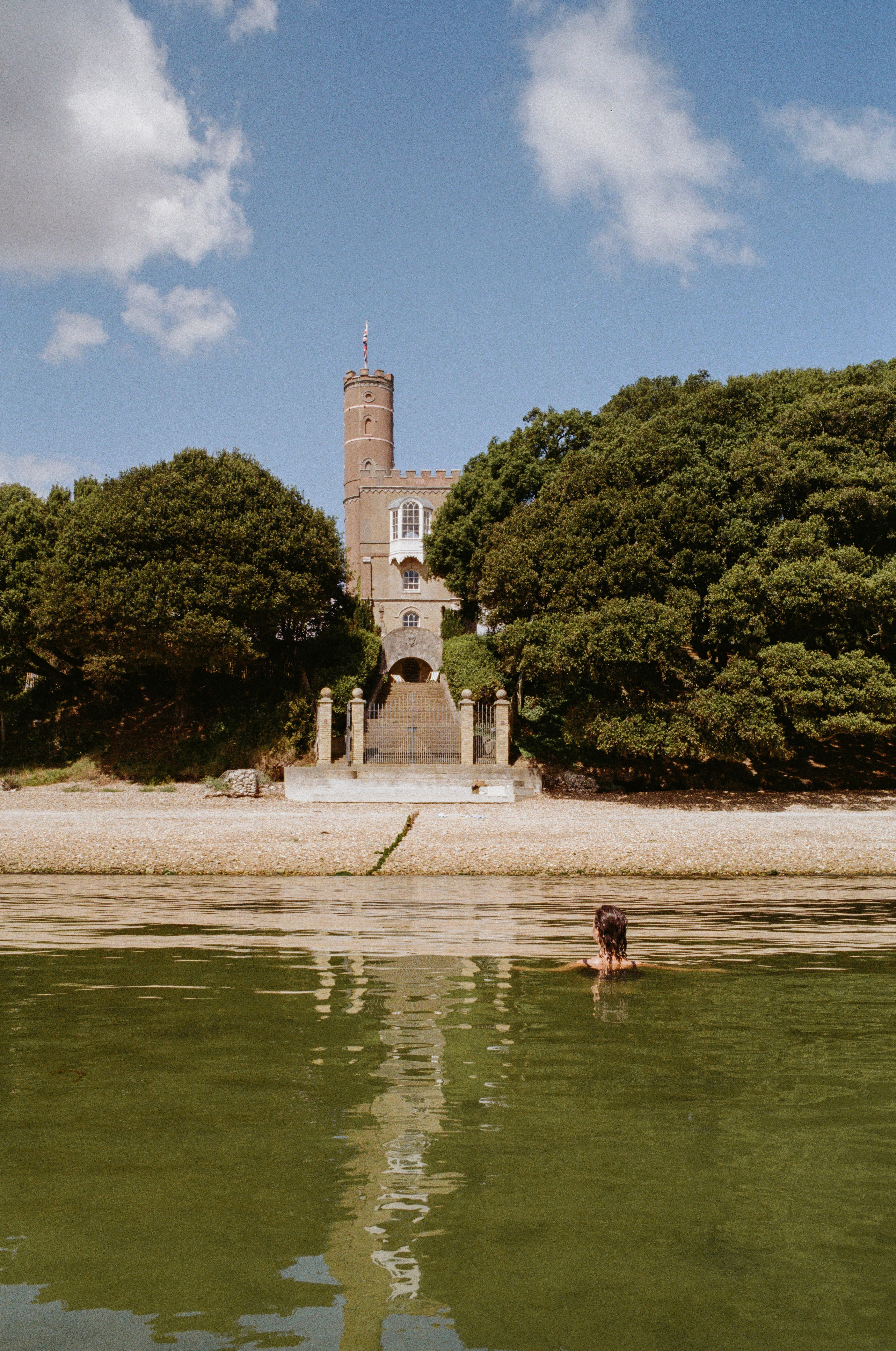
The sea’s glimmer flashed through a row of trees planted either side of an imperial stone staircase to the beach. The posts of its curved banisters are topped with ornate pedestals. I ran my fingers across their fading forms; seashells and starfish encrusted with lichens. A strange sculpture alongside the steps caught my eye. On closer inspection, it appeared to be the stone-carved feet of a bygone statue.
After Luttrell’s death in 1803, the tower was sold to Luttrell’s brother-in-law, the 7th Earl of Cavan, a distinguished soldier in the Napoleonic Wars and commander of the British Army in Egypt. He brought back various Egyptian trophies, including these mysterious feet. They are thought to be the base of a statue of Ramesses II of the XIXth dynasty and possibly travelled as a ship’s ballast. The currents and paths those toes must have crossed.


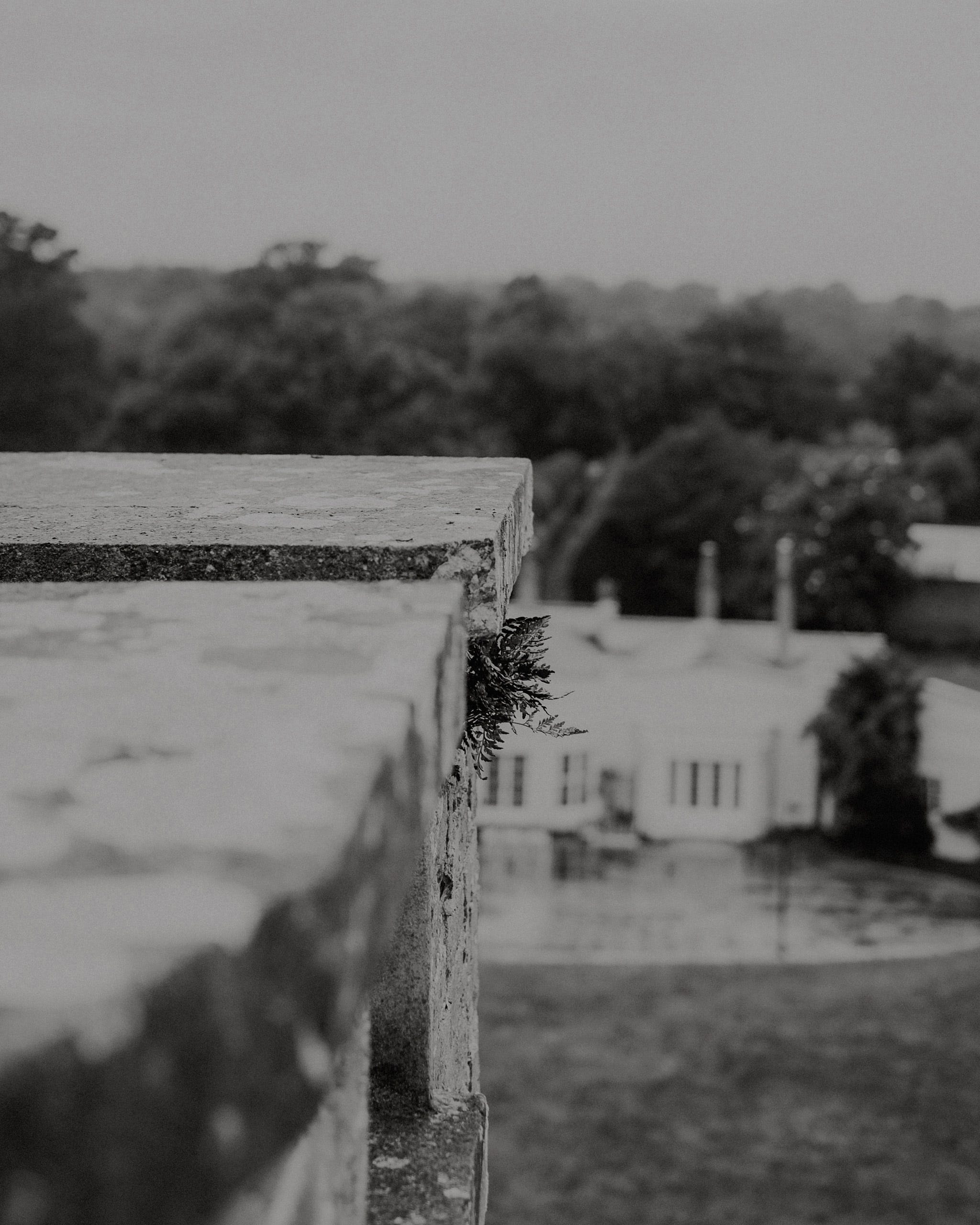
We uncovered the keys to our landmark and coiled up the spiral stairs. The tower’s lofty heights beckoned. Leaning over the rooftop parapet, we took in the lie of the land from a breezy tree-top vantage point. Here, natural beauty, whimsy and seafaring history merge. Forestry reigns and crowds the shoreline. A distant island allures from beyond boat-strewn ripples. A neighbouring manor house casts a stately shadow across the lawn. A setting to conjure up a fable.


I envisage the grounds beneath us scattered with tents that the Earl of Cavan had erected after taking up residence at the tower. The tower itself was considered too small for his needs, so a large manor was built on the lawn-ward side. Eaglehurst House was designed to remind the general of his campaigns, with a central encampment of sorts; ceilings simulating the sweep of canvas, flanked by apartments on either side. It was one of the first substantial houses in England to be built as a bungalow. The future Queen Victoria visited at the age of 14 in 1833. She was drawn in by Eaglehurst and wrote in her journal ‘it is a very singular place; there is a very high tower near the sea, but they live entirely on the ground floor like tents’.
When the Earl of Cavan died, the Eaglehurst estate passed to his grandson who put it up for sale in 1843. At this time, Victoria, now Queen and married to Prince Albert, visited again. She considered purchasing the estate as a marine residence before ultimately deciding on Osborne House on the Isle of Wight. Had she chosen it, the tower would have been dramatically altered and embedded in a sprawling royal residence.
The estate had another close call when a potential buyer planned to turn it into a holiday resort. It was saved in 1844 by local doctor Andrew Robert Drummond of Cadland, who succeeded in acquiring the properties to prevent their development.
For the next hundred years, Eaglehurst House and Luttrell’s Tower were let to a succession of tenants who altered remarkably little. Written accounts from the 1870s speak of the lavish parties hosted by tenants Count and Countess Batthyany. Crowds of young people would sail over to play tennis on the newest craze, a lawn court. Annual fêtes, garden dinners and dances lit by Chinese lanterns were held. Fireworks were let off from the tower’s roof, with the occasional squib unexpectedly exploding and swishing round the stairs. Making our way back down them, I listened out for a dramatic hiss, seeking the flicker of sparks illuminating the stone and a whiff of gunpowder snaking through time.


On the staircase, we collided with the memory of an excited girl climbing skyward while clutching a bright red scarf that trailed in her wake. From the top of the tower, the girl and her mother had waved the scarf at a resplendent ocean liner on its maiden voyage. Their gesture was returned by a flurry of handkerchiefs and scarves on board the RMS Titanic. The girl’s father, Guglielmo Marconi, had installed a state-of-the-art wireless telegraph system on the ship, crucial for transmitting and receiving Morse code messages and distress calls. Just five days after passing by the tower, its high-pitched distress tone helped save hundreds of lives when the Titanic tragically struck the iceberg.
Guglielmo Marconi was a pioneer of radio. He rented the tower from 1911–1916 and used the top room as a laboratory to conduct his experiments, often tinkering late into the night. Here Marconi began to successfully beam wireless messages across the Solent, continually seeking to improve the range and reliability of his groundbreaking technology.
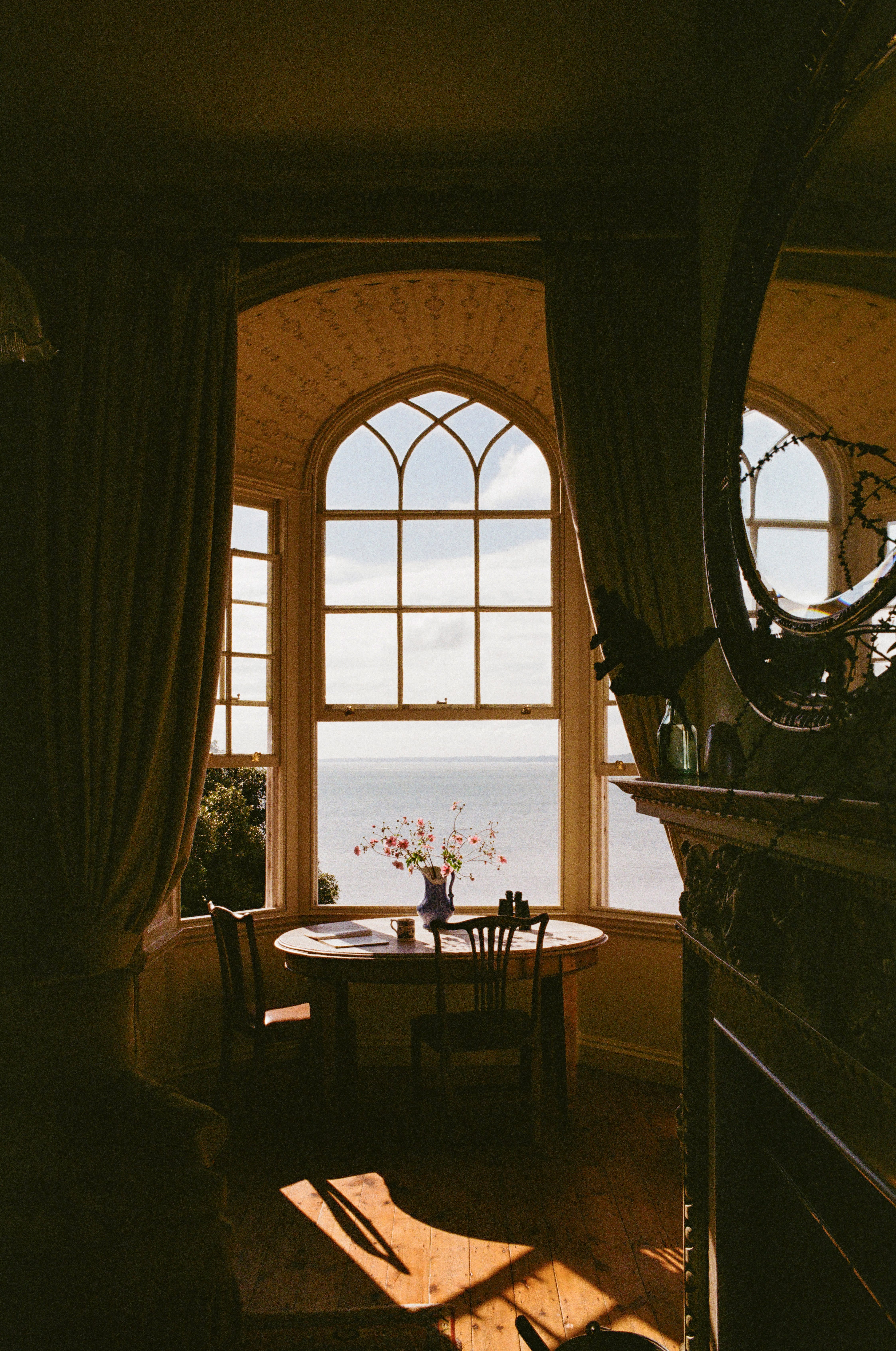
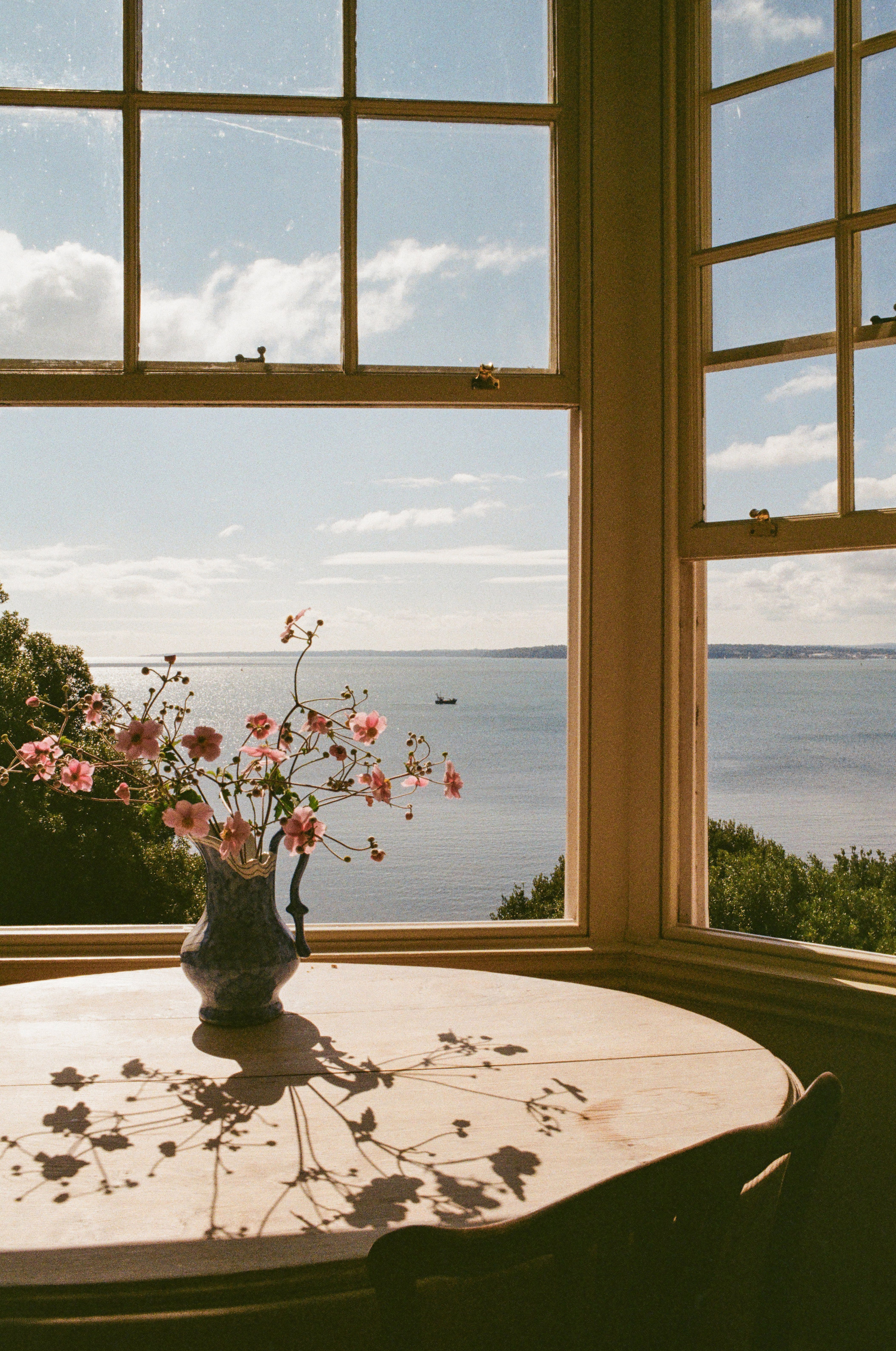
When first stepping inside the top room, I was taken in by the imposing bay window with an uninterrupted line of sight across the water; a view to draw out the spirit in you. The interior, like the rest of the tower, strikes a balance of grandeur, comfort, eccentricity and scale, with a central fireplace made for tall, flickering candles. The unusual moulded plaster decorations are especially beautiful, including an elegant frieze of seashells. Certainly a worthy space for the inspiration that Marconi had found to advance his work.


Sir Guy and Lady Granet were Eaglehurst’s following tenants. They commissioned Clough Williams-Ellis, architect and designer of the renowned Italianate village of Portmeirion in North Wales, to restore parts of the tower and design both the ‘perspective’ landscape garden behind Eaglehurst House and the grand steps to the terrace and beach.
After unpacking, we sauntered down the beach steps to explore the shore before sundown. We reached a pair of wrought iron gates at the foot of the steps surmounted with Neptune’s protective trident. These are a later addition but much in keeping with the maritime splendour of Clough Williams-Ellis’s design. How lucky we felt to turn their key to the waves.
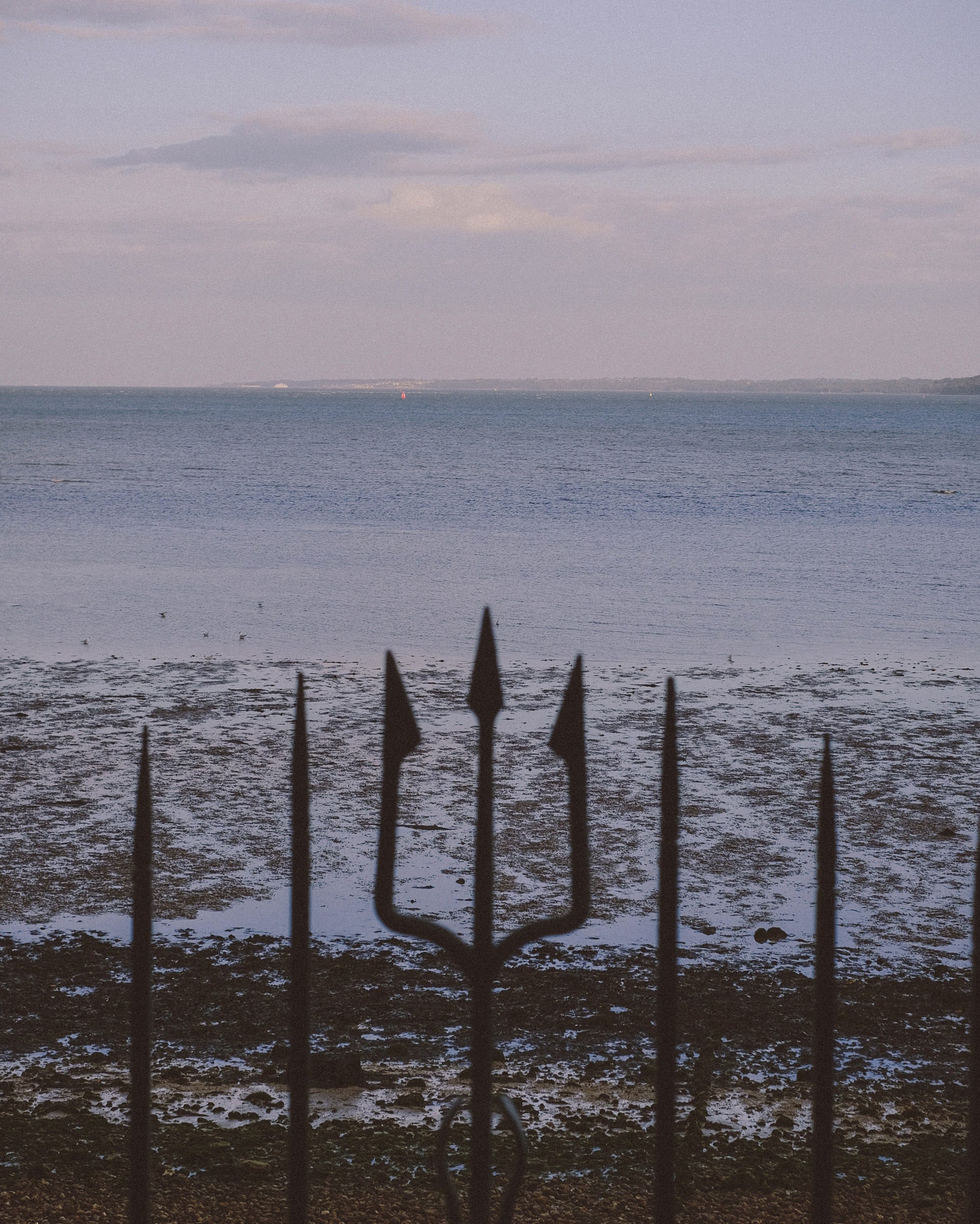
We were alone on this wilder stretch where trees press close to the water’s edge. Their bleached, castaway limbs mark the high tide line, which we searched for shells and shapely stones. Beyond rows of the jagged teeth of wooden groynes, we spotted a colourful terrace of beach huts and the distant outline of a family breathing in the evening from their porch. The sea had become a mosaic of shattered mirrors as it slowly sucked and churned the shingle in the last smoulder of the sun.


The folly appeared all the more enchanting from the foreshore. It was difficult to picture the hauling down of its gleaming white flagpole and boarding up of the windows with heavy steel shutters. They had been too conspicuous during the Second World War when the RAF requisitioned the tower as a lookout to be manned around the clock. What harrowing grandstand views it would have provided at the height of the Battle of Britain.
After the war, the house and tower returned to their owners in a battered state. They were sold to Colonel Valda Gates who had served in the Royal Army Service Corp. Over the years, he carried out major repairs and alterations, making the tower habitable year round by installing a modern bathroom and kitchen, laying wooden floors and replacing chimney pieces. The cellar was plastered and painted, the sea tunnel was reopened, the stair turret rendered, windows were added, and the plasterwork and frieze were reinstated.


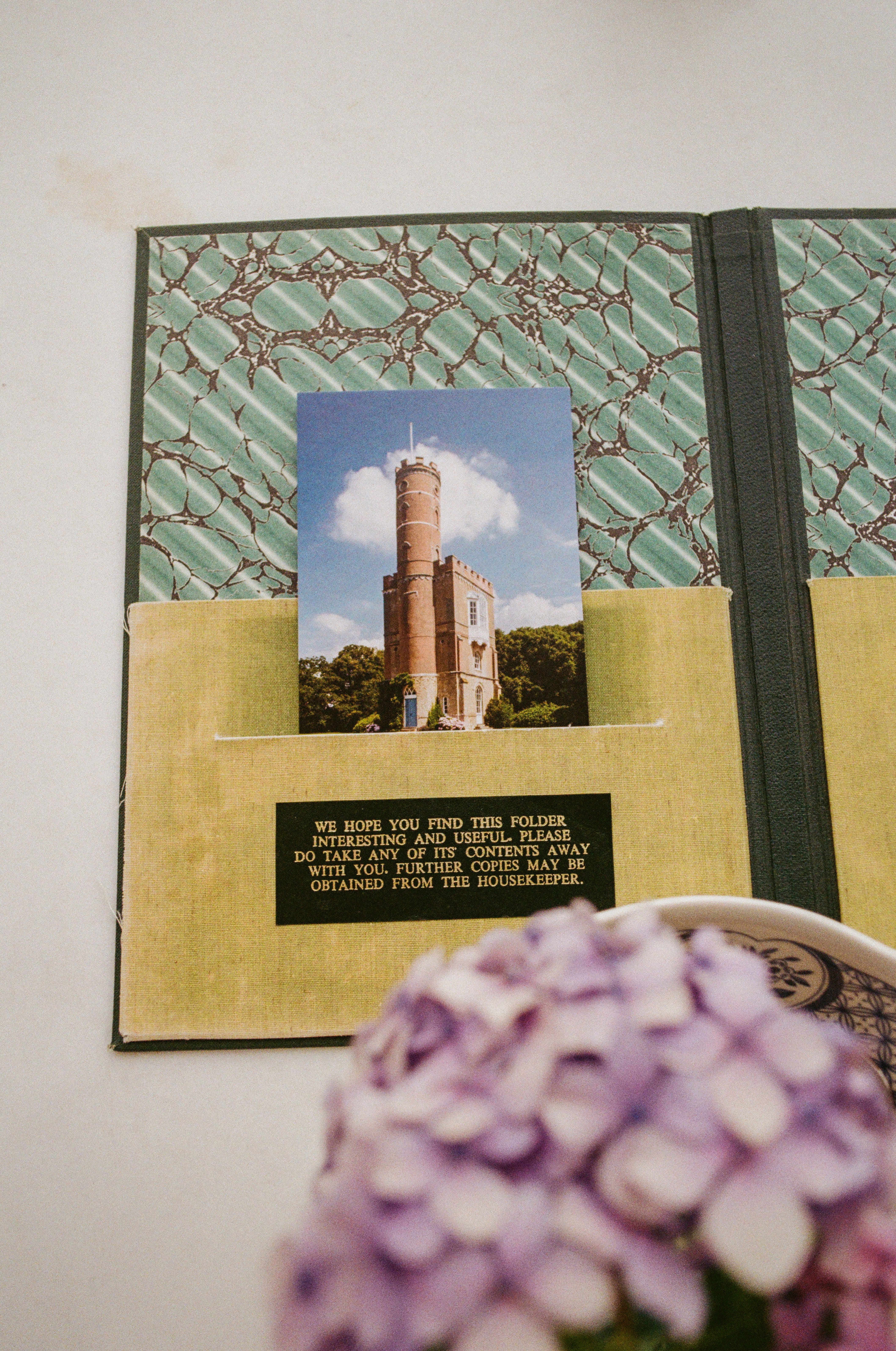
Thankfully the Tower fell into another good pair of hands when it was acquired by a building preservation charity in 1968. The Landmark Trust rescues at-risk historic buildings and lets them for holidays, while the profits go back into maintaining the properties and funding future restorations. When the Trust became keepers of Luttrell’s Tower, the layout was tweaked under architect Philip Jebb’s direction. Chiefly the sitting room was moved from the ground floor to the top floor, a small but practical kitchen was nestled into a corner where there had been an en-suite bathroom, and decorative finishes were simplified to reflect the building’s Georgian heritage.
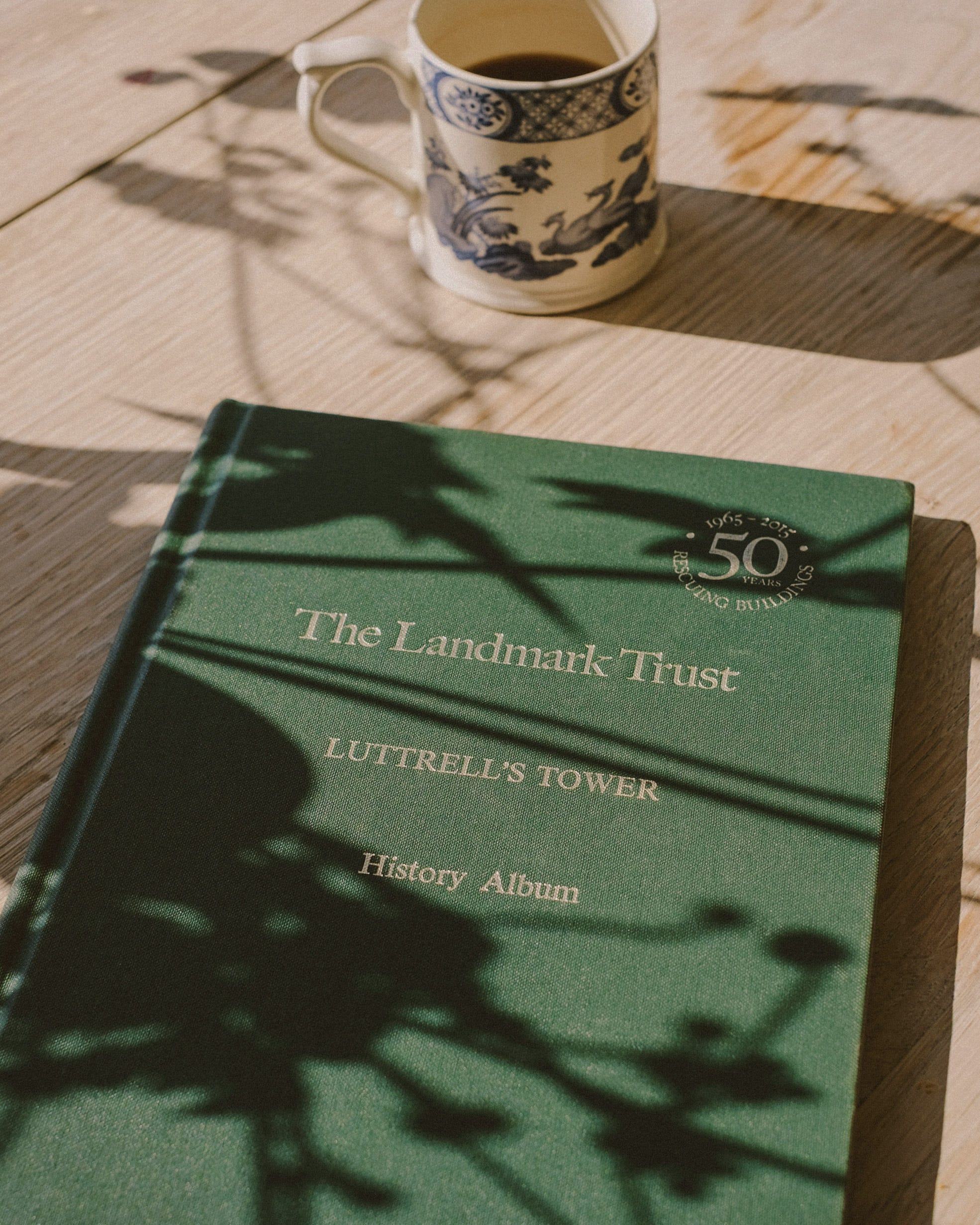
Eaglehurst House is now privately owned but the Landmark Trust continues to care for the Tower. Its exposed position and the harsh maritime environment makes it a high maintenance building that requires regular attention. The Trust does a brilliant job maintaining it as one of their most popular hideaways. F and I first experienced a Landmark stay earlier this year (you can read about our time at Castle Bungalow here). It was an absolute joy to inhabit another of their cherished conservation projects honouring unique tides of history.


On that first evening, F prepared supper with ingredients we had picked up en route from local farm shops at Setley Ridge and Beaulieu, while I arranged a bunch of anemones with hardy beach-side blooms plucked from the shingle. Every room of the tower merits a fresh, frothy vase of flowers. We tucked into a New Forest mushroom risotto from the bay window as the moon rose and lights dotted to life across the Solent. For our whole stay we were mesmerised by this outlook and soothed by the constant lapping of the waves. From this nook, we tracked ships of all shapes and sizes and looked up their onward destinations. This became a favourite pastime over the next few days.


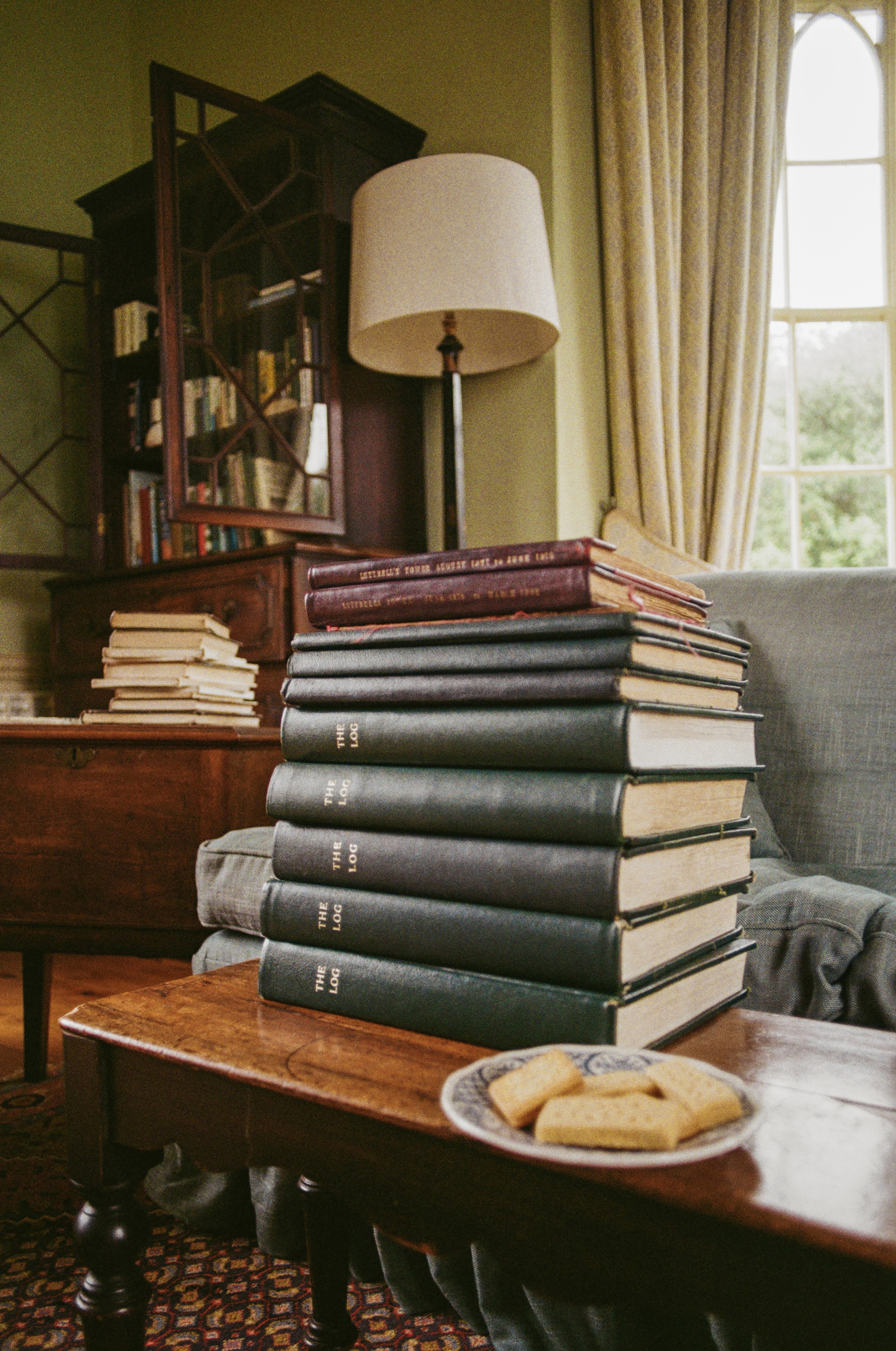
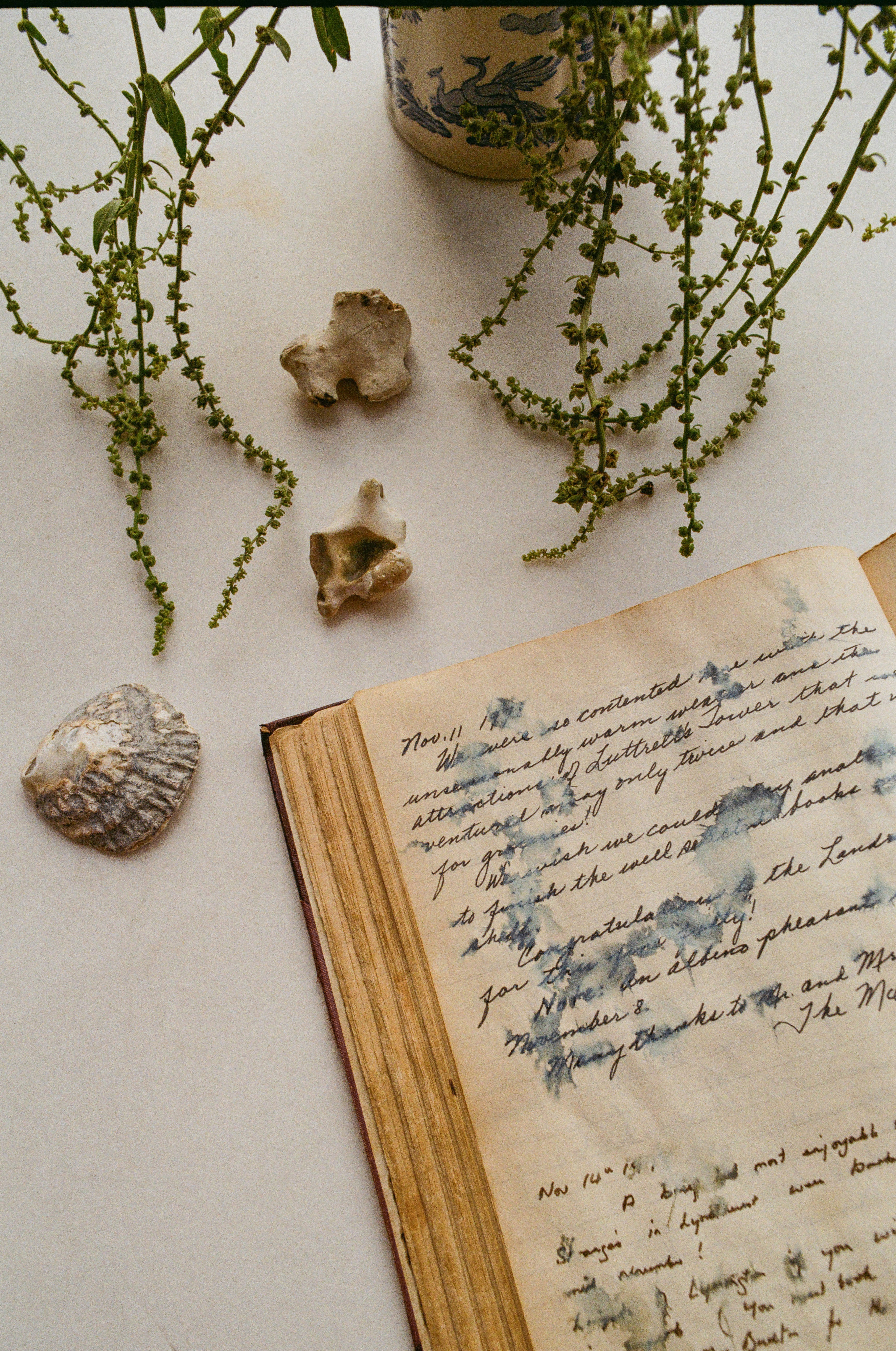
After dinner, we lounged in comfy armchairs with books from a glass-fronted cabinet. The titles in this small but perfectly formed library explore both real and imagined histories linked to the tower and local area. I went straight to the dark green leather-bound logbooks that date back to the early 1970s. Within their pages, the years are chronicled by written accounts of those that have stayed. There are drawings, paintings, poems, nagging complaints, advice, well-wishes and narrations that mark significant life milestones. Notches of time lean through handwriting. I flicked through the logs chronologically and noticed the names of a Mr and Mrs Buxton repeated throughout earlier volumes.


The Landmark Trust had ‘inherited’ Colonel Gates’ loyal gardener and housekeeper who had begun working around Eaglehurst from 1951. The Buxtons were helped for many years by their son, who later took over with his wife, eventually retiring in 2013. The logbooks spoke highly of all the Buxtons. Accounts mentioned them faithfully stocking the larder as per shopping lists that had been sent ahead of arrival, dutifully collecting guests that had travelled by train from the station and greeting them like old friends. Many entries have been signed off with ‘see you next year, usual week’.


I was particularly struck by the writings of guests that had visited as children and returned as adults, measuring themselves against the tower. Accompanying relatives had since passed away, they themselves had grown and changed, with new friends or family members in tow, but the tower, for the most part, remained the same.


We kept the windows open and dozed soundly to the murmur of the sea. The luxurious wooden bed placed in the centre of our bedroom was hard to rise from. I twirled up the stairs to make a cup of tea. The thrill of bare feet on cold, smooth stone helped rally me from a sleepy haze.


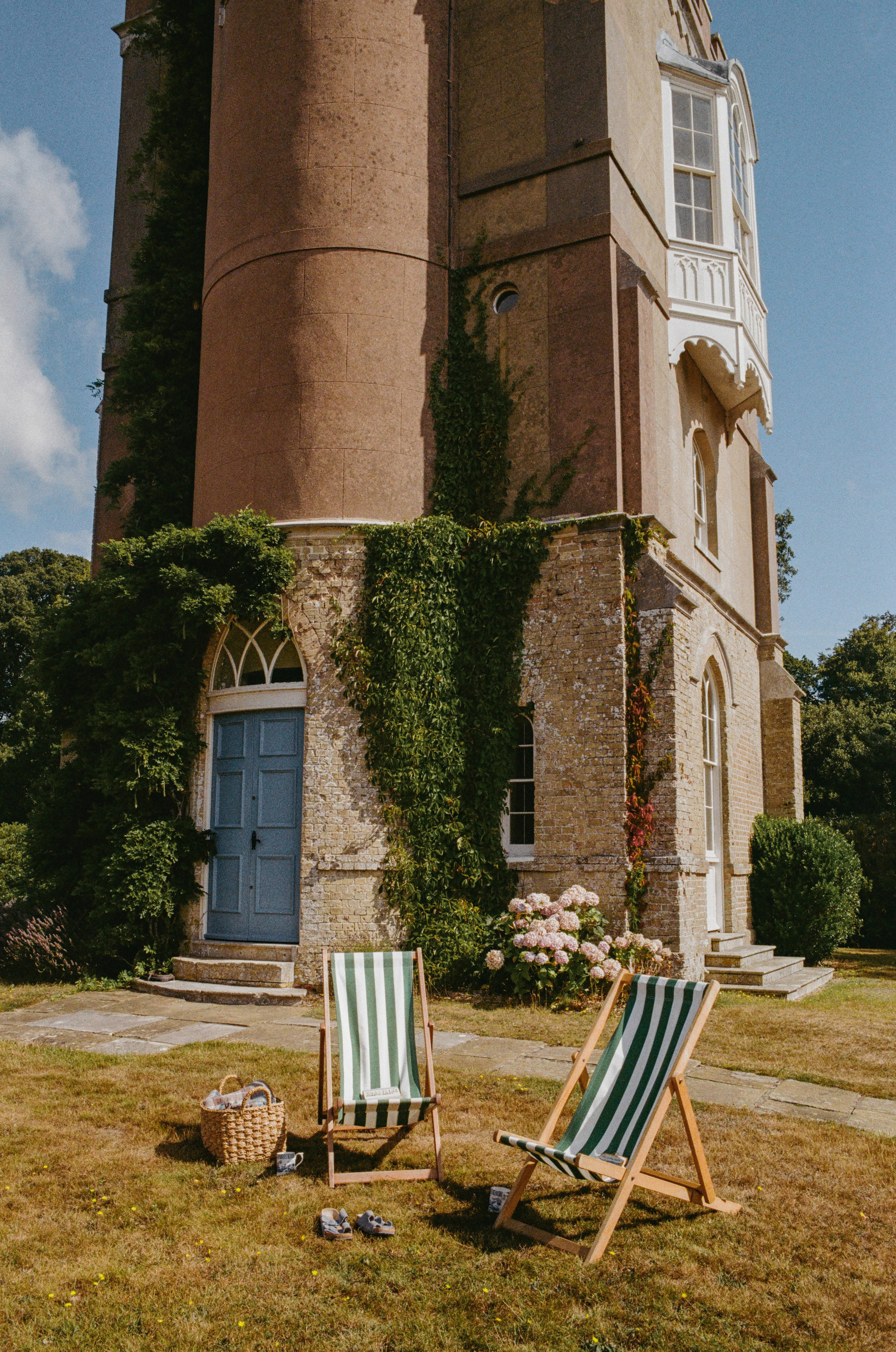
The tea accompanied me on a stroll around the garden, on a dull, crisp dawn. Still in my nightdress, I crossed the lawn that stretched to the sea and unexpectedly came upon a young muntjac. A treasured moment passed before the muntjac startled towards the forest thicket. In the aftermath of a long, dry summer, grass patches shared in the sandy tones of the tower facade, broken by deep green leaves of wisteria that slithered high to curl around the rooftop windows. The pale pink and lilac hydrangeas were beginning to brown and amber hints of the approaching autumn were tinting the creepers.


Following a breakfast of eggs and soldiers, we went for a ramble along the foreshore, past the colourful huts and to the end of the spit, where the grey-scarred face of Calshot Castle stands against the elements. This moated artillery fort was built in the 16th century by Henry VIII. It’s a weather-beaten place of rusty doors and flaking paint, slowly being sanded away by salty air and now a stronghold for warbling gulls. The former RAF seaplane base and barracks alongside it operate as an activities centre. We picked up Kitkats from the climbing wall cafe and snacked away by the boatyard overlooking the marshes towards a blockish power station. I spotted red corn poppies growing through cement cracks in the car park and yellow horned poppies sprouting alongside blue-green clumps of sea kale from the shingle.


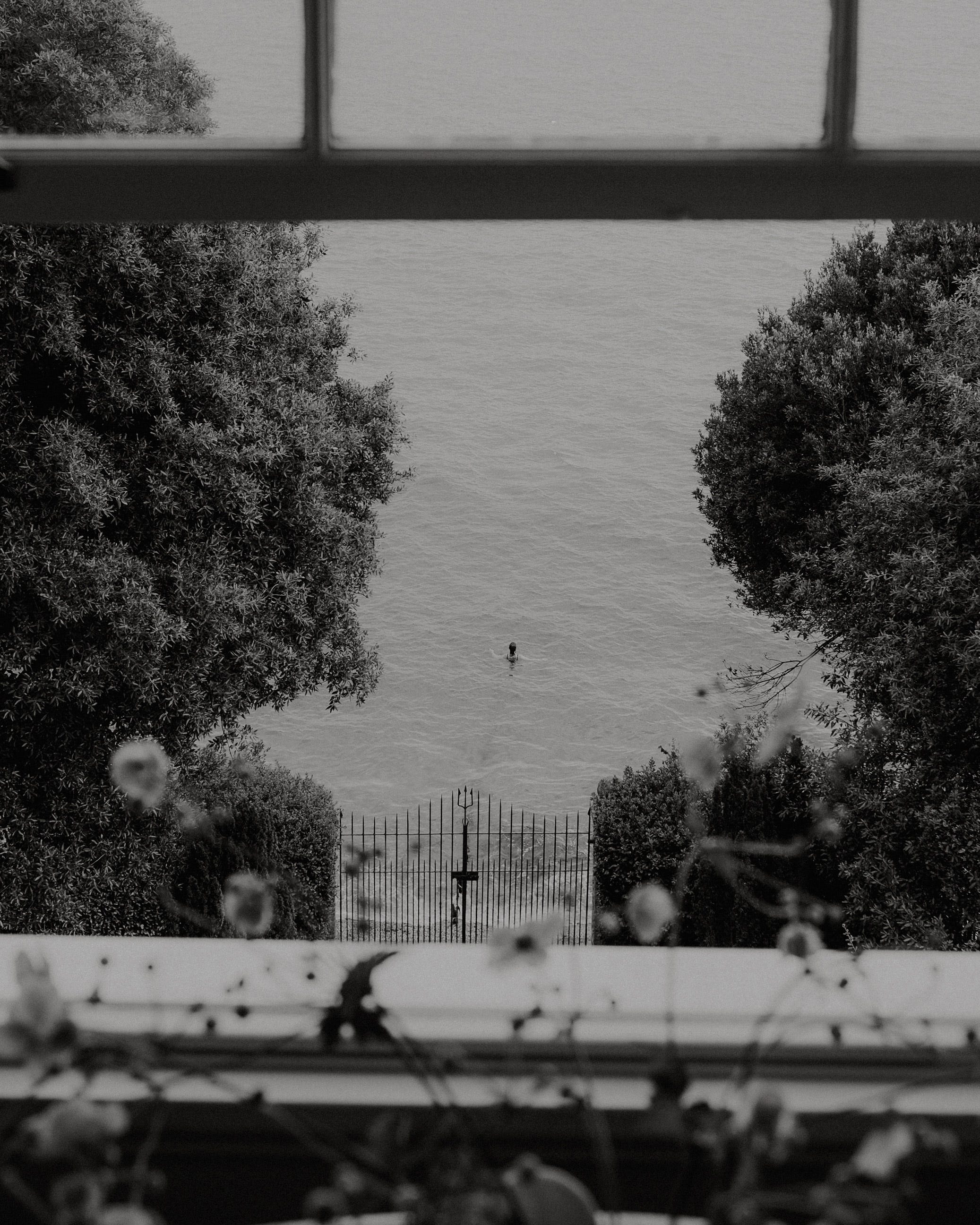
It was mizzling steadily when we returned to the tower. Intent on a swim, we floated with the rocking tide at the foot of the steps. The water was surprisingly warm and danced around us with the drumming of raindrops. As we dried off on the terrace, the shower came to its end with a cool breeze that blew inland from the sea. I ran an afternoon bath and wallowed, steam curling out the bathroom porthole.


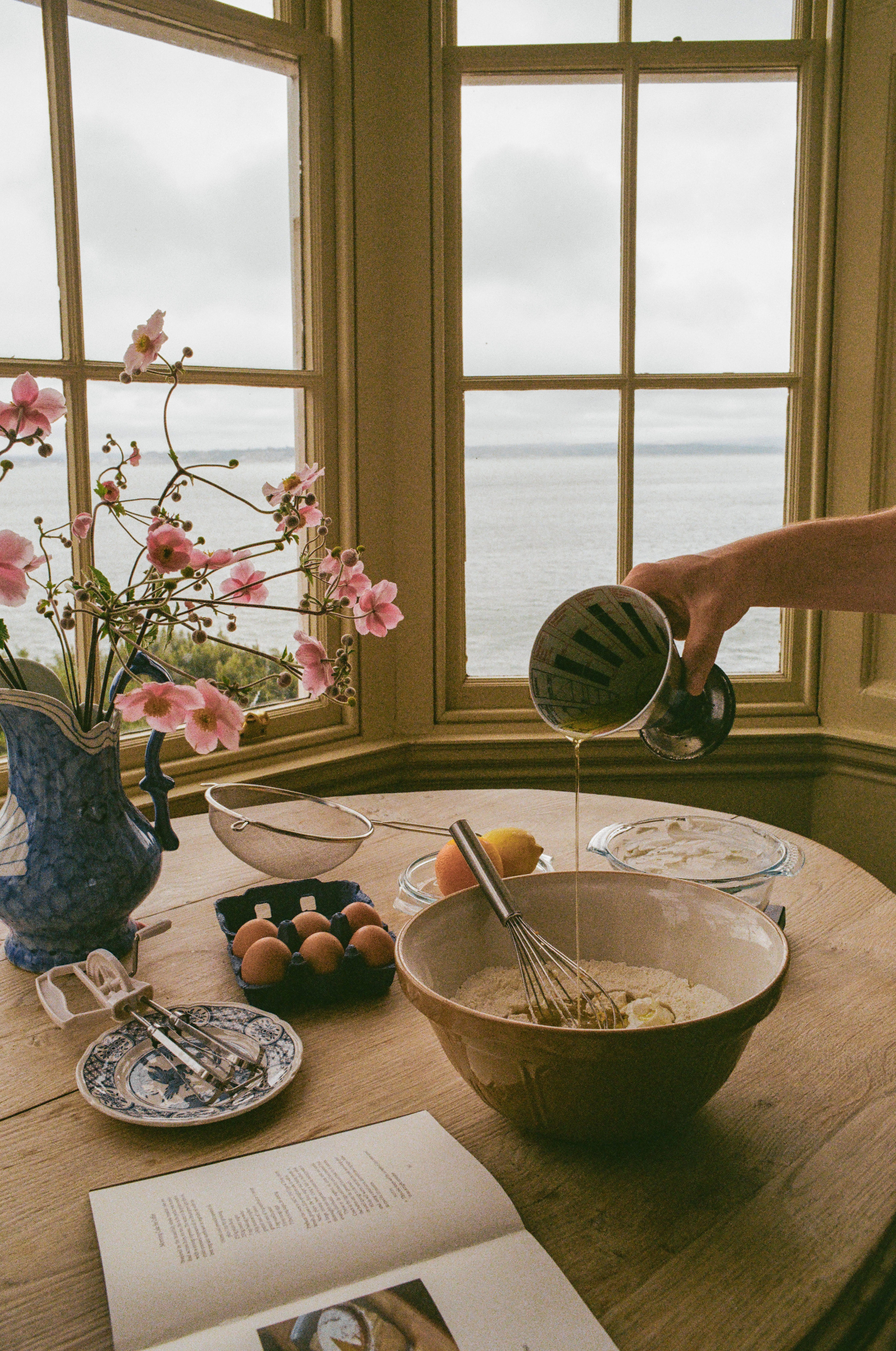
I’m very fortunate that F is at home in any kitchen. He baked us a zesty sponge cake while I wandered about the tower lolling by the windows with a pair of binoculars and taking lots of photographs. There were delightful details to absorb in each room, from gentle curves to large wooden shutters, veined marbled surfaces, artworks mounted in elaborate gilded frames, headboards carved with scallop shells, and a plaster lioness guarding her chimney breast.


We set and lit the open fire in the top room. Flames leapt beneath the pouting face of another 18th century surround, her cherubic features framed by wispy locks that fold into a crowning bow. F rustled up grilled fish, buttered greens and herby potatoes. After dinner, we dipped in and out of the library, watched candles curl their yellow tongues, and indulged in a cheese board as the fire sank to embers.


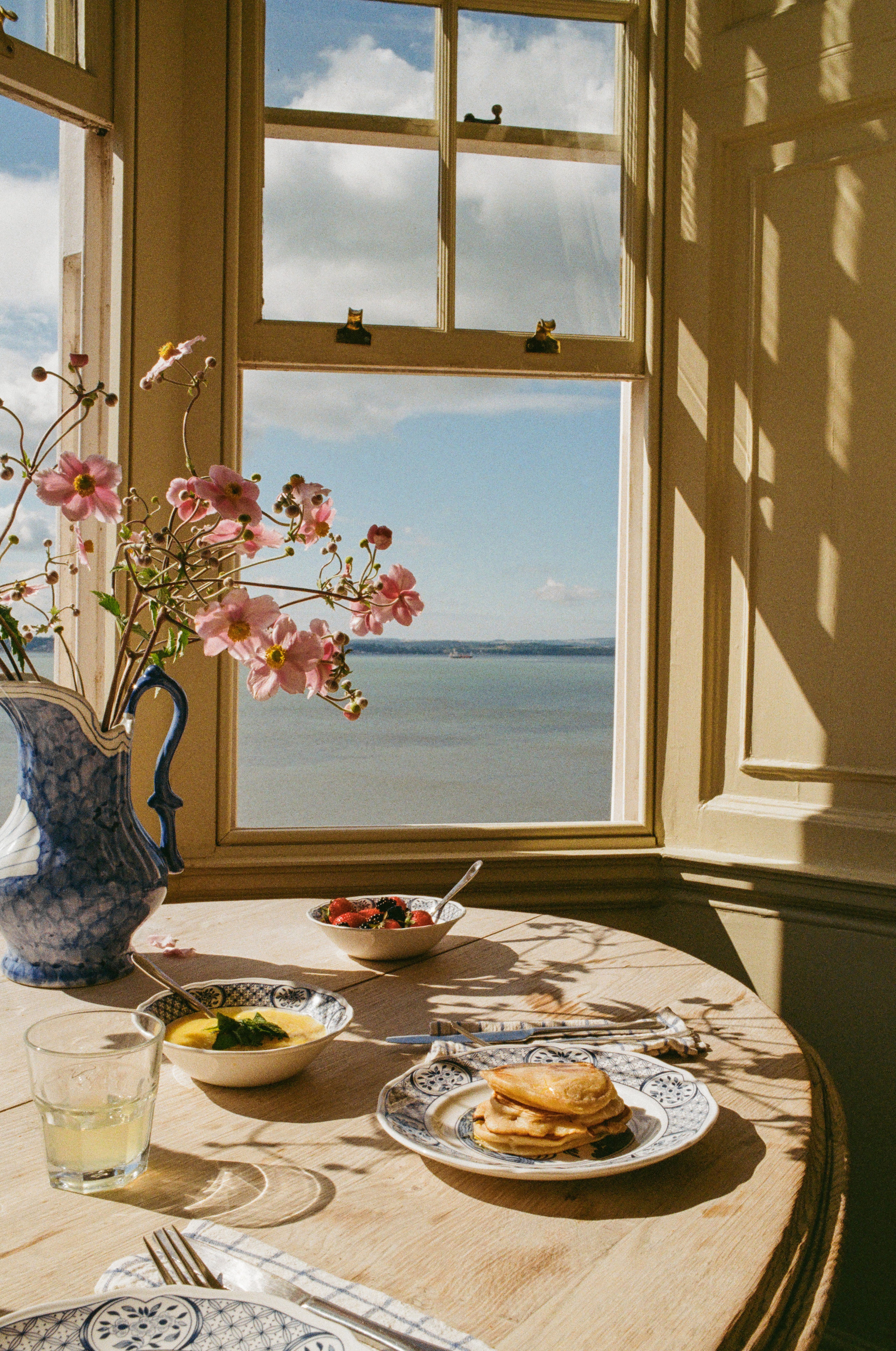
The following day, the rose light of the morning sun was hot and shining. The sea glittered under skies of August blue as sails gently fluttered across the channel. We flung the windows wide for a blast of sea air and ate a stack of fluffy pancakes with lemon curd and berries. The vase of leggy anemones on the table cast prancing silhouettes across our plates.
We set up stripy deckchairs on the lawn and lazed there for a while, before F caught some rays from the terrace. I nested on the roof, alone in the majesty of shifting tree tops and boxy battlements, where yellow lichens blot the dusty-pink render. It was quite the sun-trap and the sea soon began to call. I emerged on the beach via the underground tunnel. The novelty of this access route could never wear thin. The rest of the afternoon was spent mermaiding about in the water, sprawling out on the shingle like butterflied mussel shells and reading on the terrace. We had sandwiches with a bottle of wine at the beach steps. It all felt like a wonderful dream.


A mood of lovely laziness gave way to another day. It unfolded with a fry up, then walks up and down the strandline. I collected beach treasures and read more logbook entries on the steps until a change in the weather, swift and sudden. A dark sky rolled in and roused the sea, which grew white-capped and menacing. Then came the boiling rain clouds. Time to retreat to the tunnel.


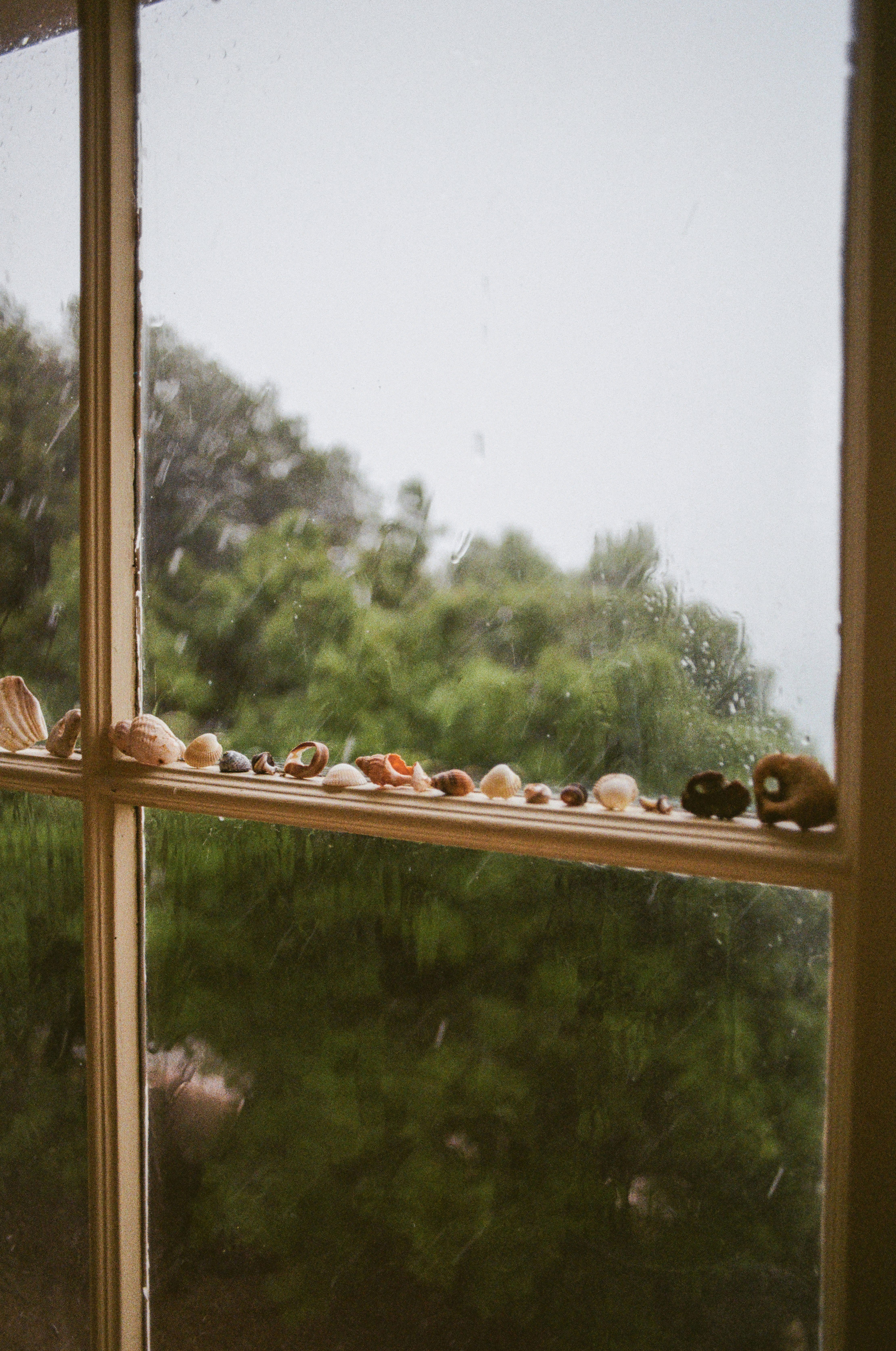
From our front row seats at the bay window, we watched the lightning storm advance. F made us fish finger sandwiches while I threaded hag stones onto a length of string and lined up a parade of shells along the window ledge. The Isle of Wight was lost to the eye in a thick, boat-swallowing mist. We listened to the thunder-drench, the thudding swell and the trumpet cries of a cruise ship horn. The ship emerged from the fog like a mirage while we tucked into leftover cake. It was a faultless position to witness a raging tempest. When the gale had blown itself out, a rainbow finale lit up a patch of horizon.


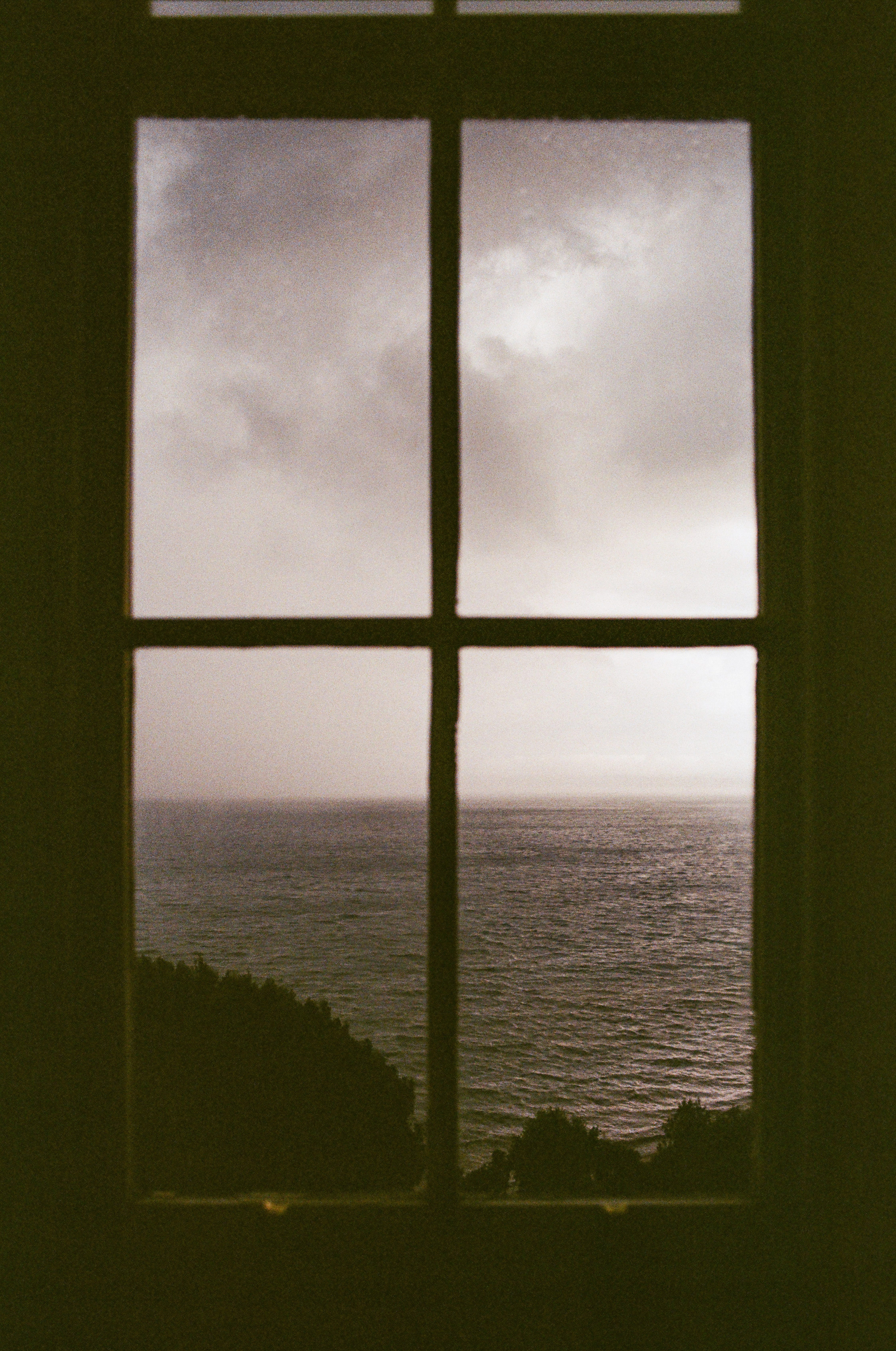


The smell of stormy weather loitered as our last dusk at Luttrell’s Tower bruised purple. We walked down to the sea through a ghostly mist that hung above the lawn. There was an otherworldly hush upon the Solent; its waters wrinkled like soft velvet ribbons beneath a delicate fingernail moon.
The sun blazed a golden morning when the time came for us to reluctantly depart. We clambered to the very top of the tower for one last look over Luttrell’s kingdom, pausing to read the initials, names and dates on the stairwell; engravings from others that had been moved by this singular place, who sought to leave some small mark within its stone embrace. The flag billowed over our heads as we said our see you laters, hoping very much to one day return.


We hadn’t felt the need to venture far from the tower’s clasp during our stay. But our route home was peppered with pitstops across the New Forest, Britain’s largest remaining tract of unenclosed land.
We cooed at the free roaming ponies on every turn to the quintessential village of Beaulieu. From here, we walked a circular route to Buckler’s Hard, a fascinating 18th century shipyard where many of Nelson’s fleet were constructed. A line of pretty red brick terraces trail down to the river, amongst them, a shipwright’s cottage, workshop and tiny chapel. We perched outside the pub and watched an archaeological dig excavate a historic slipway from the buttery mud. How many of the boats built and launched here must have sailed by Luttrell’s tower?
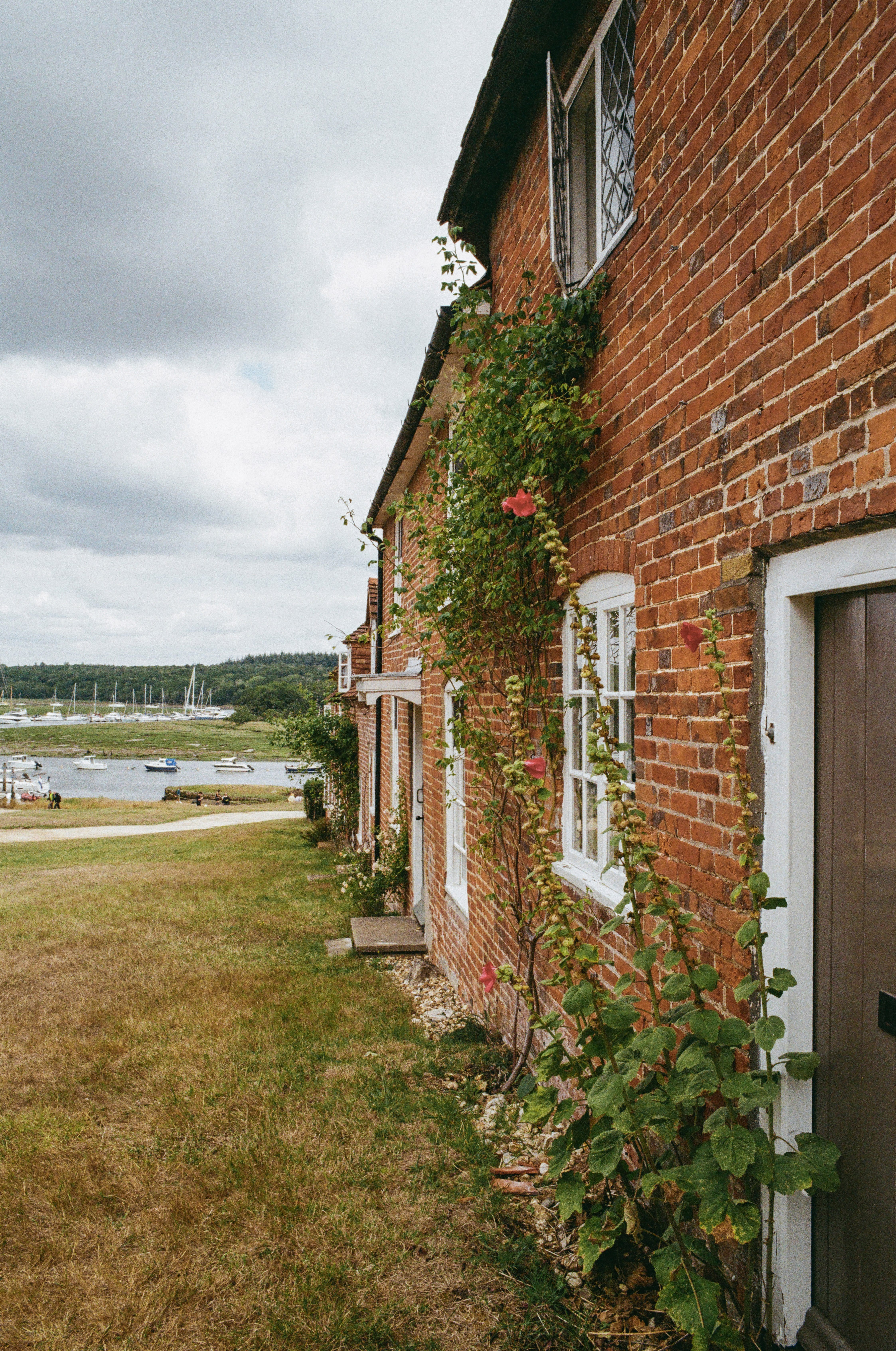


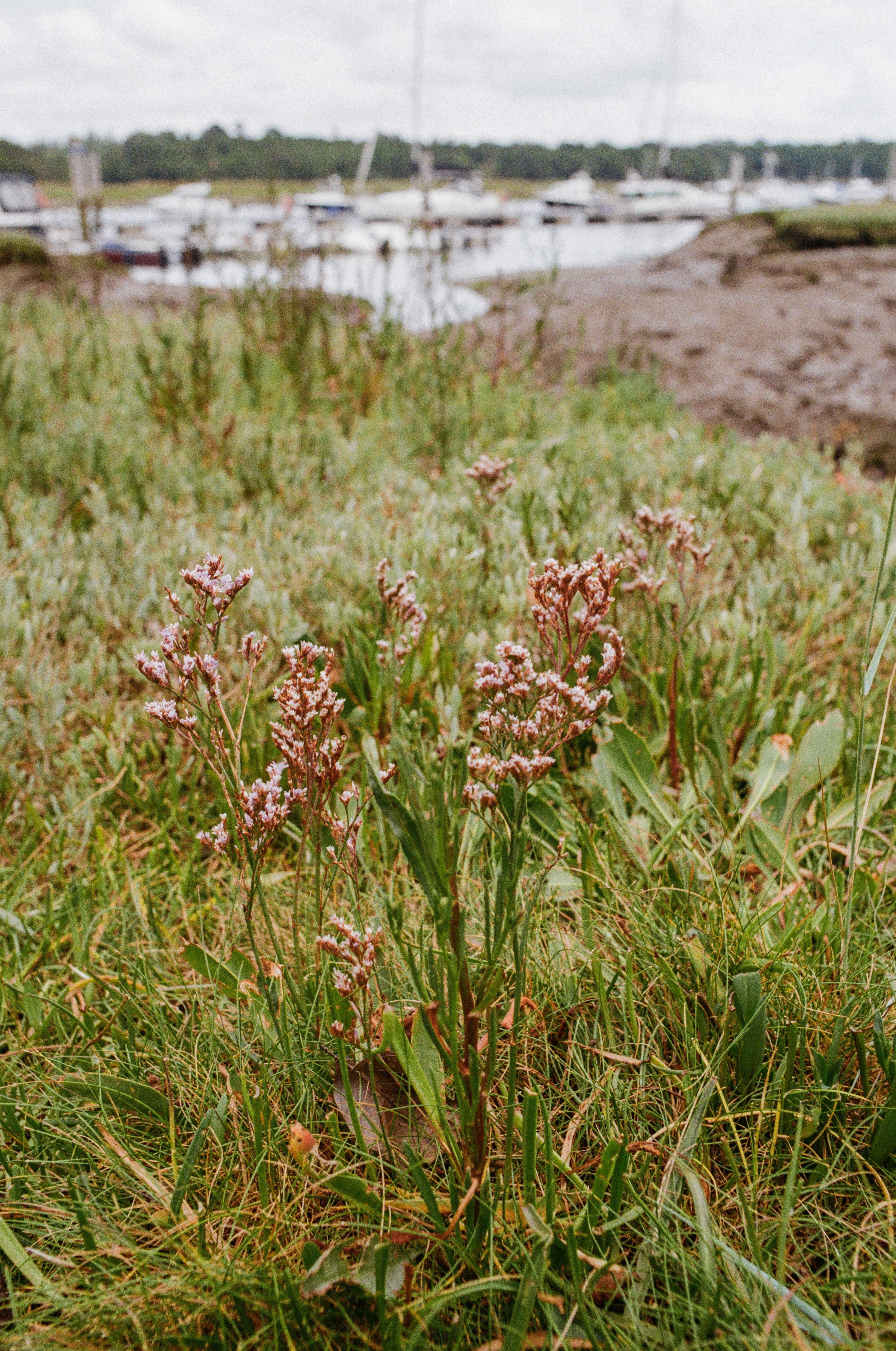
Mud and saltmarsh dominate the landscape of the Beaulieu River estuary, where seaweeds, marsh samphire and sea lavender thrive. We ambled through pine forests skirted with ferns and across swaying grassy drifts loomed over by twisted oaks. From a bird hide, we observed the long, probing beaks of redshank and curlew snack from the creeks and channels.


Lunch was a delicious selection of grazing plates on the garden terrace at The Pig, followed by local ale and cider at two brilliant old boozers, The Cuckoo Inn and The Royal Oak, all the while reflecting on what a week it had been.
The days at the tower had slipped away but time had also stilled. Caught between land and sea, we had dreamt over books, revelled in blue and white china feasts and restorative Solent swims. We had watched the late summer sun meet a salty storm, stalked vessels big and small, spied herons and oyster catchers wading in the shallows and deer across the lawn.


We left Luttrell’s Tower on the cusp of my thirty-fifth birthday, my pockets full of shells like those that graced the wall frieze. Our minds stirred with deeply layered tales of contraband, royal visits, sunken ships, radio rooms, extravagant parties, steadfast gardeners, dependable housekeepers, and generations of contented guests over the arches of the years. I hoped that a part of us might linger at the tower amongst them all, sharing in the joy and awe of the folly with the blue door, and the room with a view like a painting.
Thank you to the Landmark Trust for a special stay and for safekeeping the spirit of architectural gems like Luttrell’s Tower.